Life Science · Matter & Energy in Living Things
Where Does Plant Growth Come From?
Use mass evidence and models to argue that plant-growth materials come chiefly from air and water.
Read the science notes ↓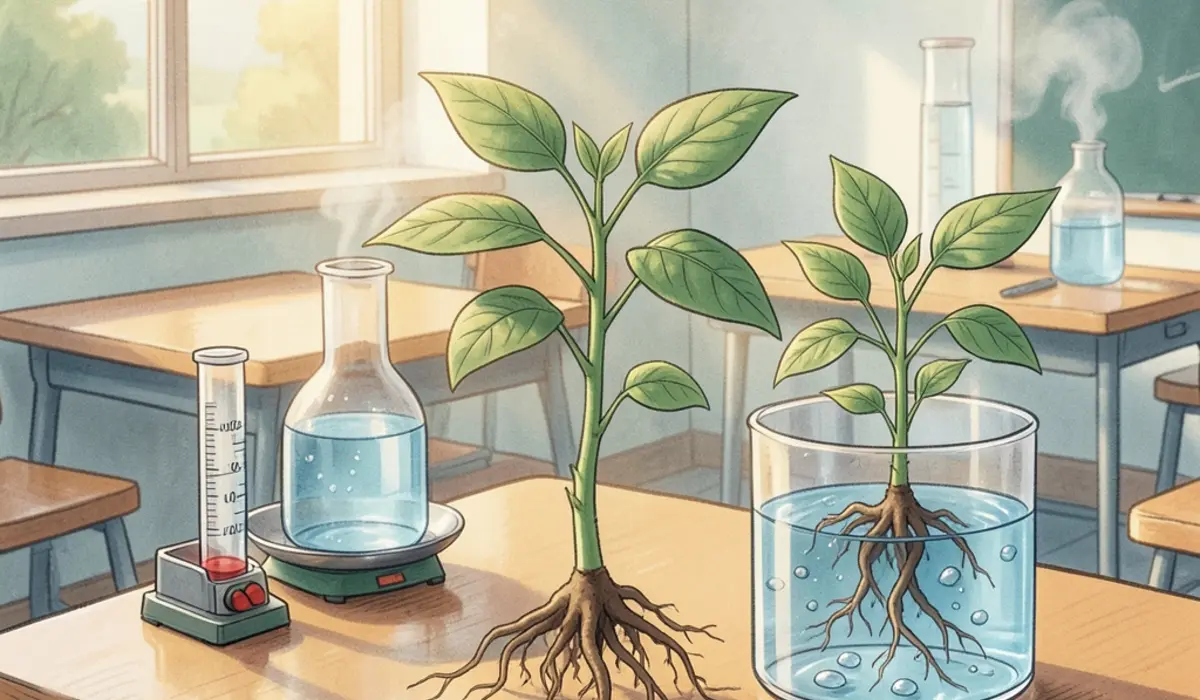
A quick look inside this lesson
What happens in class?
Question to start with
Where could added matter come from?
What students actually do
Calculate and compare changes.
Evidence of learning
Relevant evidence and reasoning.
Lesson plan
Where Does Plant Growth Come From?
A step-by-step guide to help you teach this lesson.
Extra context for teachers
Science notes: Where Does Plant Growth Come From?
A short concept refresher and teaching perspective. The full procedure, printable materials, and student tasks are available in the lesson resources above.
Science in context
Test competing claims
Mass comparisons and growth with roots supported in mineral-containing water both challenge the idea that plants eat soil for most of their mass.
What makes the idea observable?
A plant gains 500 g while dry soil loses only 5 g. Can soil loss account for most of the gain?
Compare the quantities before making a claim.
A misconception worth addressing
- Sunlight is energy, not plant matter.
- Soil can supply minerals and support.
Teacher tip
- Use MATTER and ENERGY arrow cards.
- Provide a claim-evidence frame.
Verified curriculum references
Plan with confidence
Lesson overview
What students will learn
- Use mass evidence to evaluate the claim that most new plant material comes from soil.
- Build a model showing water and carbon dioxide from air as chief material sources for plant growth while keeping sunlight labeled as an energy input.
Key science ideas
- Gases are matter even when invisible.
- Roots take in water and leaves take in carbon dioxide.
- Air and water supply most material for plant growth.
Lesson at a glance
- Grade 5
- 55 min
- ~8 min prep
- 5-LS1-1
- 4 materials
What’s included
- Lesson Plan
- Investigation
- Teacher Slides
- Printable Worksheet
- Teacher Answer Key
- Interactive Activity
- Vocabulary