Life Science · Matter and Energy in Ecosystems
Microorganisms: Helpful, Harmful & Decomposers
Use microscope images, role evidence, and decomposition models to compare bacteria, yeast, molds, and other microorganisms as decomposers, helpful organisms, or harmful organisms.
Read the science notes ↓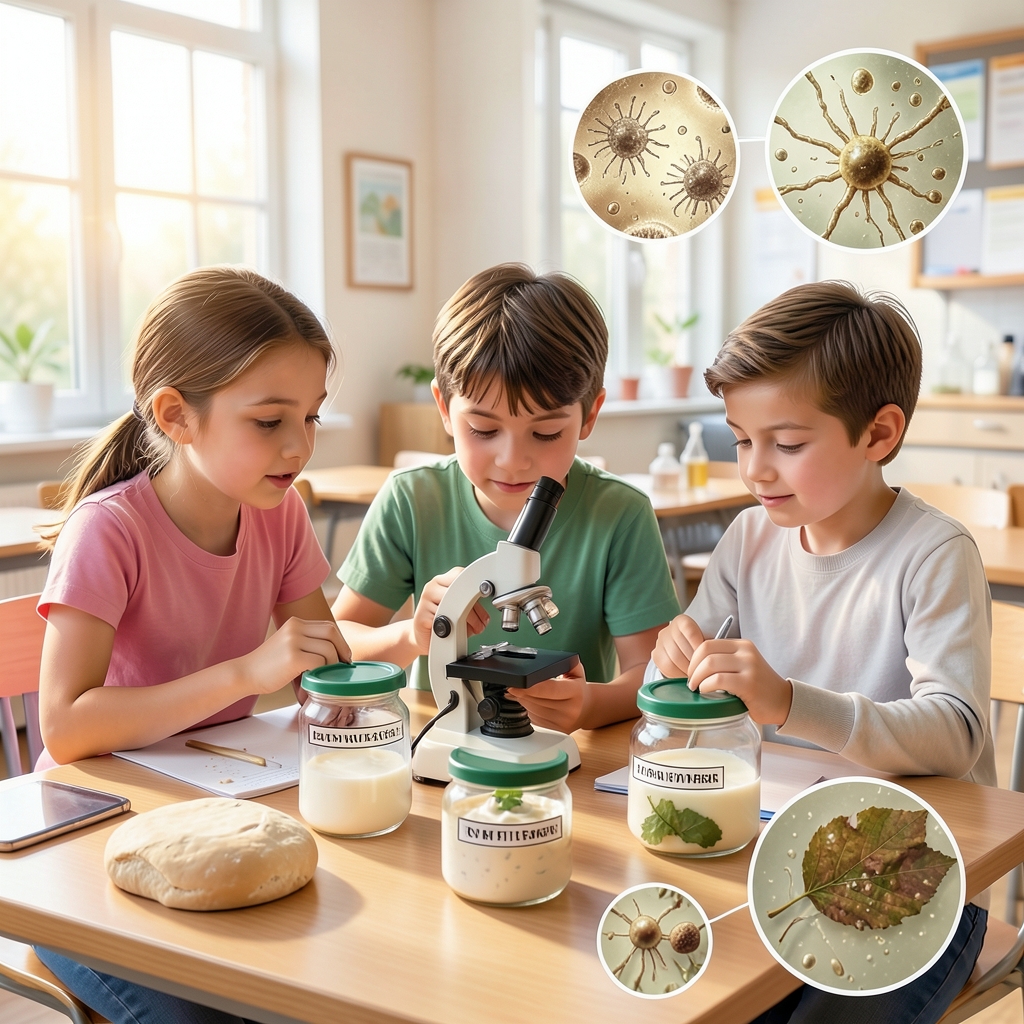
A quick look inside this lesson
What happens in class?
Question to start with
Does 'microorganism' tell us whether an organism is harmful?
What students actually do
Sort roles and analyze the gas-production comparison.
Evidence of learning
Evidence-based role claims and a valid model limit.
Lesson plan
Microorganisms: Helpful, Harmful & Decomposers
A step-by-step guide to help you teach this lesson.
Extra context for teachers
Science notes: Microorganisms: Helpful, Harmful & Decomposers
A short concept refresher and teaching perspective. The full procedure, printable materials, and student tasks are available in the lesson resources above.
Science in context
Decomposers move matter through ecosystems
When microscopic fungi and bacteria break down dead plants and animals, matter is transformed and returned to the environment.
What makes the idea observable?
A yeast sample produces more gas when sugar is available. What role evidence does that provide?
The gas observation supports that the yeast is active in a fermentation process under the tested conditions. It does not show that all microorganisms behave the same way.
A misconception worth addressing
- Not all bacteria are harmful.
- Yeast is a fungus, not a bacterium.
Teacher tip
- Use role icons and simplified micrograph captions.
- Provide a three-column helpful/decomposer/harmful organizer.
Verified curriculum references
Plan with confidence
Lesson overview
What students will learn
- Describe microorganisms as a diverse group of tiny organisms with different roles.
- Use evidence to classify microorganism examples as decomposers, helpful, harmful, or context-dependent.
Key science ideas
- Microorganisms include many bacteria, yeasts, molds, and protists.
- Many microorganisms are harmless, and some are useful to people or ecosystems.
- Some bacteria and fungi act as decomposers that break down dead material.
Lesson at a glance
- Grade 5
- 55 min
- ~12 min prep
- 5 materials
What’s included
- Lesson Plan
- Investigation
- Teacher Slides
- Printable Worksheet
- Teacher Answer Key
- Interactive Activity
- Vocabulary