Life Science · Animal Behavior
Instinct vs. Learned Behavior: How Animals Respond
Compare animal behaviors that appear without training with behaviors shaped by experience, practice, or learning.
Read the science notes ↓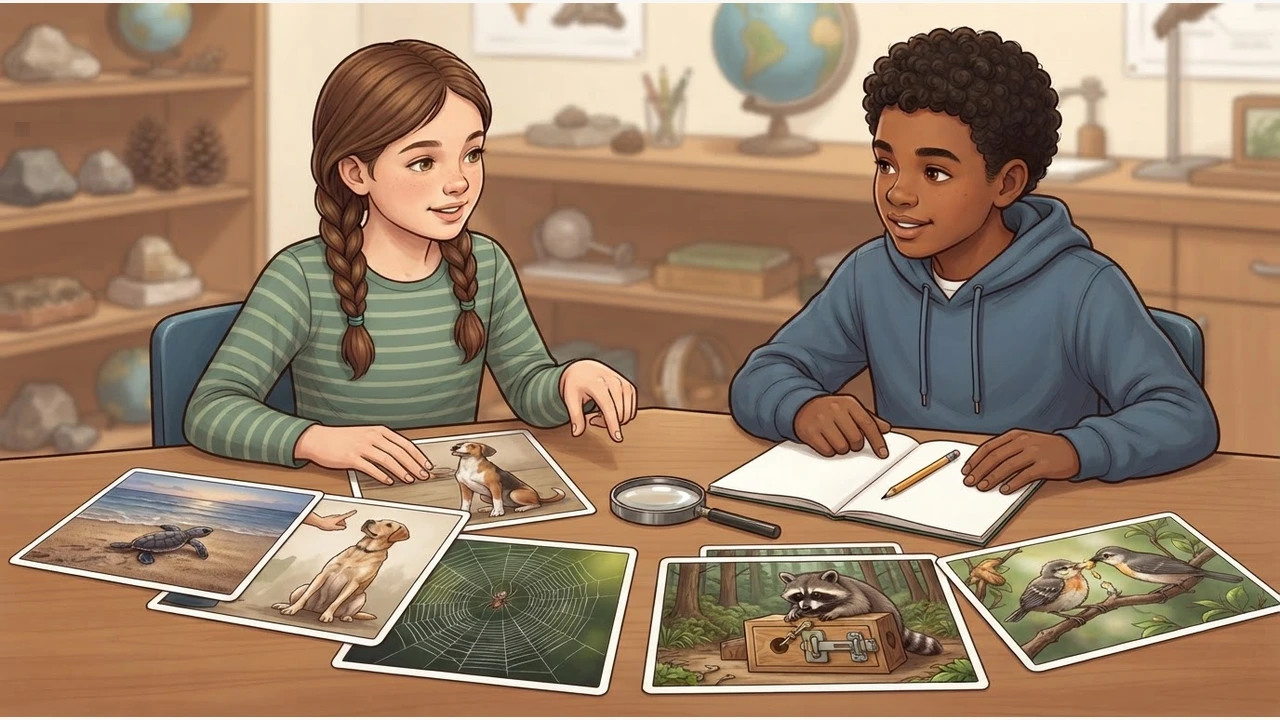
A quick look inside this lesson
What happens in class?
Question to start with
What would you need to know before deciding whether each behavior was learned?
What students actually do
Sort each case as mostly instinctive, learned, or needs more evidence.
Evidence of learning
A claim that could be revised with new evidence.
Lesson plan
Instinct vs. Learned Behavior: How Animals Respond
A step-by-step guide to help you teach this lesson.
Extra context for teachers
Science notes: Instinct vs. Learned Behavior: How Animals Respond
A short concept refresher and teaching perspective. The full procedure, printable materials, and student tasks are available in the lesson resources above.
Science in context
Avoid judging by the action alone
Two animals can perform similar actions for different reasons. The useful evidence is whether the behavior appeared without teaching or changed because of experience.
What makes the idea observable?
A dog begins sitting when it hears a hand signal only after many training sessions. What evidence matters most?
Focus on whether practice or experience changed the behavior.
A misconception worth addressing
- Complicated behavior is not automatically learned.
- Simple behavior is not automatically instinctive.
Teacher tip
- Use three sorting cards: MOSTLY INSTINCTIVE, LEARNED, NEEDS MORE EVIDENCE.
- Provide sentence frames: I think ___ because the animal ___.
Verified curriculum references
Plan with confidence
Lesson overview
What students will learn
- Distinguish mostly instinctive behavior from behavior learned through experience or training.
- Use evidence from an animal's history and situation to classify a behavior.
Key science ideas
- Some behaviors appear the first time an animal faces a situation, even without practice.
- Other behaviors change after experience, observation, or training.
- An animal's history is useful evidence when deciding whether a behavior was learned.
Lesson at a glance
- Grade 4
- 45 min
- ~8 min prep
- 3 materials
What’s included
- Lesson Plan
- Investigation
- Teacher Slides
- Printable Worksheet
- Teacher Answer Key
- Interactive Activity
- Vocabulary