Life Science · Animals and Evidence
Animal Tracks & Signs: What Clues Show an Animal Was Here?
Study safe prepared clues such as tracks, feathers, feeding marks, and nests to make careful claims about animal activity without needing to see the animal.
Read the science notes ↓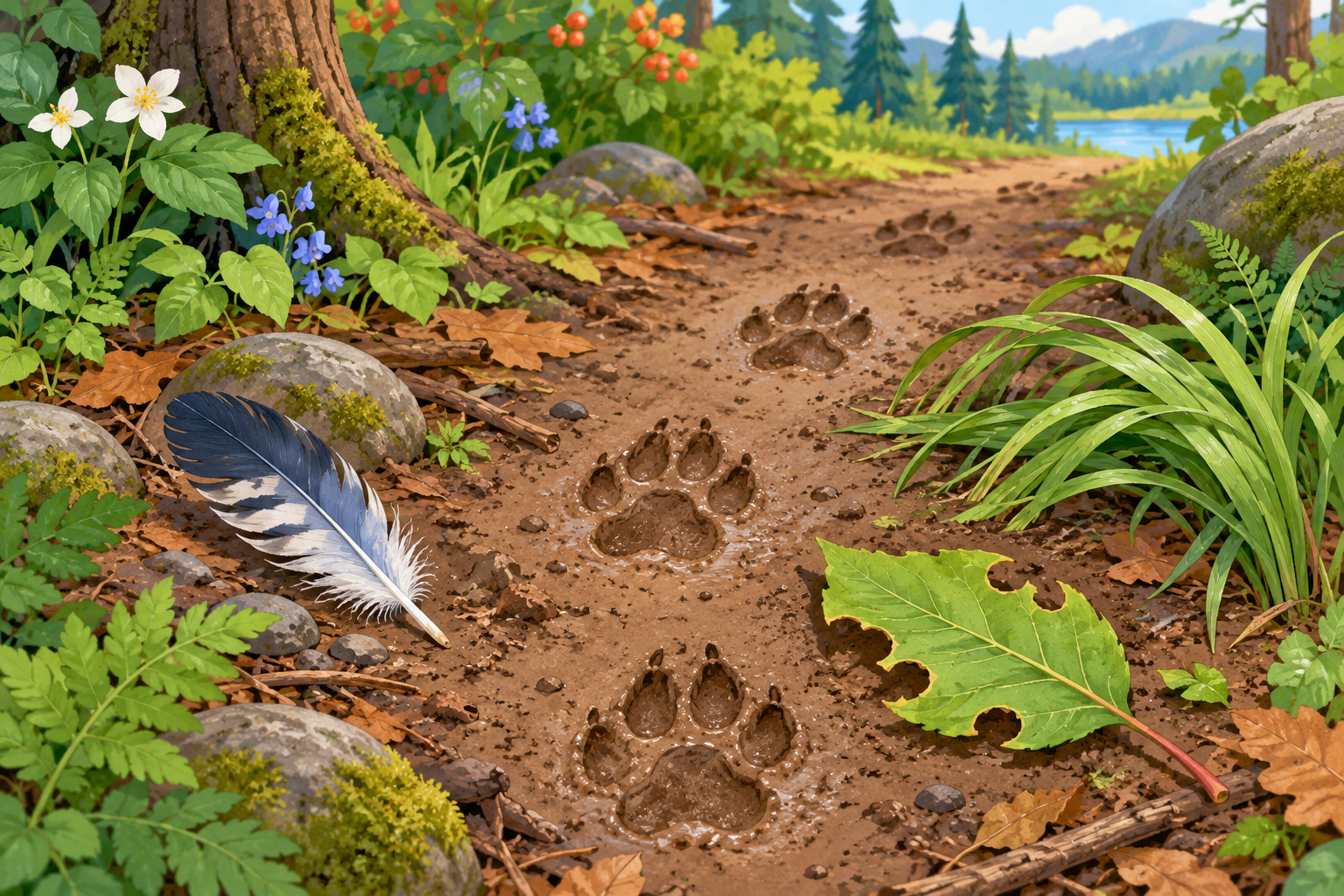
A quick look inside this lesson
What happens in class?
Question to start with
What do you see?
What students actually do
Measure, sort, and group signs by movement, shelter, or feeding.
Evidence of learning
Clear distinction between direct evidence and inference.
Lesson plan
Animal Tracks & Signs: What Clues Show an Animal Was Here?
A step-by-step guide to help you teach this lesson.
Extra context for teachers
Science notes: Animal Tracks & Signs: What Clues Show an Animal Was Here?
A short concept refresher and teaching perspective. The full procedure, printable materials, and student tasks are available in the lesson resources above.
Science in context
Observation first, inference second
Observation: there are three small prints beside a puddle. Inference: a small animal crossed the path. The inference may be reasonable, but it should stay as specific as the evidence allows.
What makes the idea observable?
A muddy path shows four-toed paw prints. Nearby is a chewed pine cone and a small feather. What can you say for sure, and what would still be a guess?
Name each visible clue first. Then decide which claims need more evidence.
A misconception worth addressing
- One print always identifies an exact species.
- If tracks are present, the animal must still be nearby.
Teacher tip
- Use large high-contrast track cards.
- Offer the frames: I observe ___. I infer ___.
Verified curriculum references
Plan with confidence
Lesson overview
What students will learn
- I can identify several kinds of animal signs.
- I can separate what I observe from what I infer.
Key science ideas
- Tracks can show foot shape, direction, and sometimes a movement pattern.
- Feathers, nests, burrow openings, chewed plants, and other feeding marks can also be signs.
- One clue may fit more than one animal, so scientists compare several details before making a specific claim.
Lesson at a glance
- Grade 1
- 40 min
- ~10 min prep
- 5 materials
What’s included
- Lesson Plan
- Investigation
- Teacher Slides
- Printable Worksheet
- Teacher Answer Key
- Interactive Activity
- Vocabulary