Life Science · Evolution & Variation
Natural Selection: Why Some Traits Become More Common
Investigate how inherited variation can affect the chance of surviving and reproducing in a particular environment, using fictional population evidence rather than an individual choosing to change.
Read the science notes ↓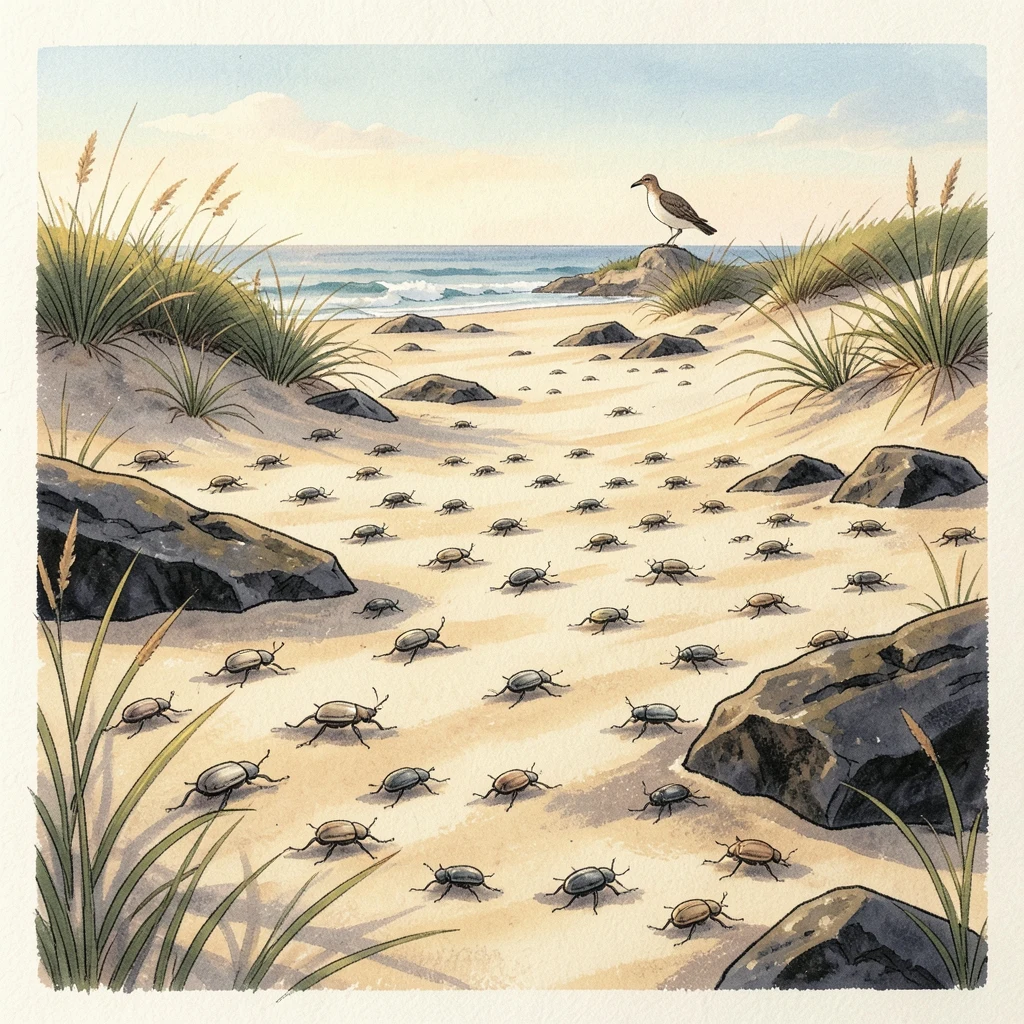
A quick look inside this lesson
What happens in class?
Question to start with
Did the birds create the variation?
What students actually do
Compare proportions and distinguish observation from explanation.
Evidence of learning
Inheritance and offspring data across generations.
Lesson plan
Natural Selection: Why Some Traits Become More Common
A step-by-step guide to help you teach this lesson.
Extra context for teachers
Science notes: Natural Selection: Why Some Traits Become More Common
A short concept refresher and teaching perspective. The full procedure, printable materials, and student tasks are available in the lesson resources above.
Science in context
What can a model really show?
Our classroom beetle counts are invented to practice reasoning, not observations from real populations. They show a possible statistical pattern, not a rule that every pale beetle must survive.
What makes the idea observable?
In one fictional beetle population, some have pale shells and others have dark shells. A bird searches for beetles on pale sand. Before explaining which traits may become common, what would you need to observe?
Do not imply beetles change their genes on purpose. Variation existed before the environmental challenge.
A misconception worth addressing
- Individuals cannot evolve useful inherited traits on purpose.
- Selection does not guarantee each individual's fate.
Teacher tip
- Offer shaded 20-square fraction cards and a sentence frame: 'In this sample ___ out of 20...'.
- Allow partner comparison before an individual written explanation.
Verified curriculum references
Plan with confidence
Lesson overview
What students will learn
- Interpret fictional population data as evidence that inherited trait variations may change an individual's chance of surviving and reproducing in a particular environment.
- Explain how selection acts on existing inherited variation, not purposeful trait changes by individuals.
Key science ideas
- Individuals of the same species can differ in inherited traits; variation exists before the environment favors any one trait.
- In a particular habitat, one inherited trait may increase the probability of surviving long enough to reproduce.
- Offspring may inherit the trait; over several generations its frequency in the population can change.
Lesson at a glance
- Grade 6
- 55 min
- ~12 min prep
- MS-LS4-4
- 4 materials
What’s included
- Lesson Plan
- Investigation
- Teacher Slides
- Printable Worksheet
- Teacher Answer Key
- Interactive Activity
- Vocabulary