Space Science · Earth & Space Patterns
Earth’s Rotation, Shadows & Sky Patterns
Explore patterns of Earth and sky in Grade 5: graph shadow measurements, explain day and night, and compare seasonal star records. Includes an interactive data lab and a printable worksheet with answers.
Read the science notes ↓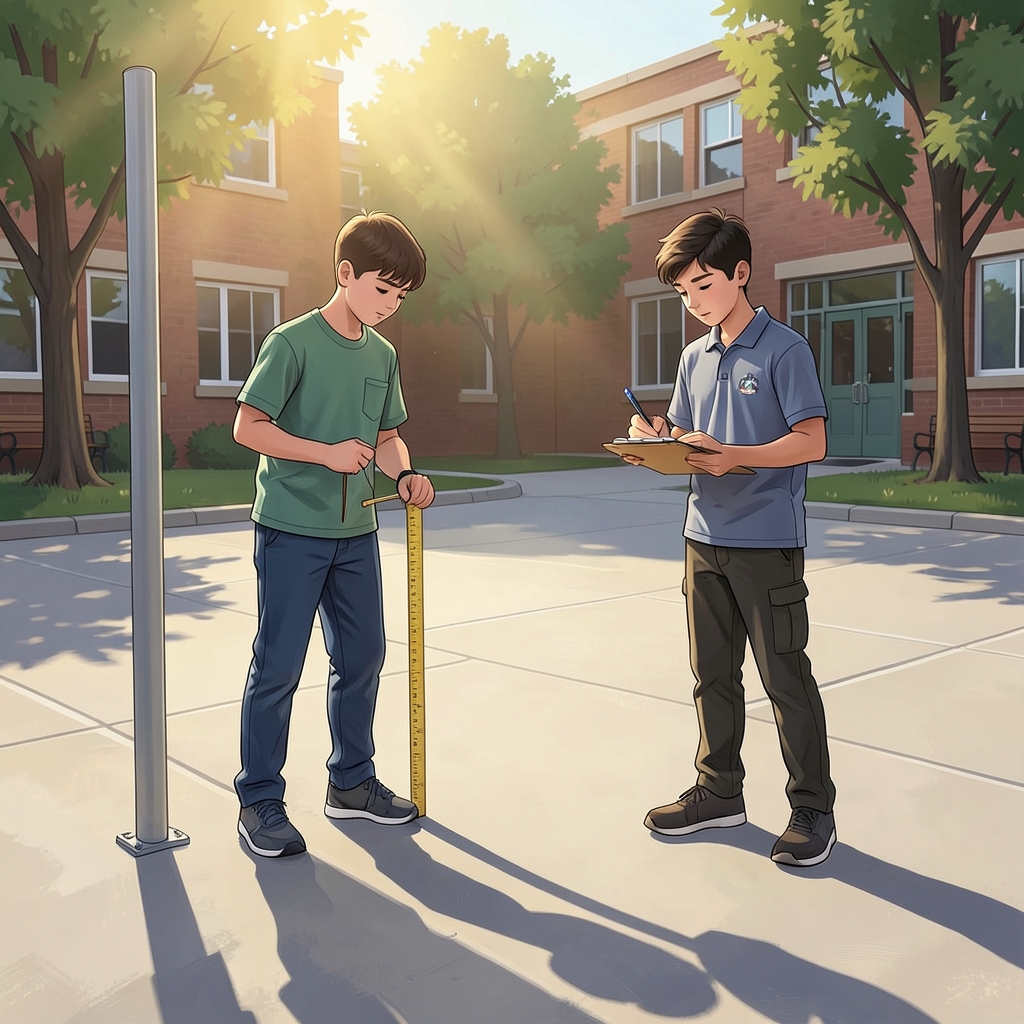
A quick look inside this lesson
What happens in class?
Question to start with
What changes?
What students actually do
Graph and compare.
Evidence of learning
Evidence-based revision.
Lesson plan
Earth’s Rotation, Shadows & Sky Patterns
A step-by-step guide to help you teach this lesson.
Extra context for teachers
Science notes: Earth’s Rotation, Shadows & Sky Patterns
A short concept refresher and teaching perspective. The full procedure, printable materials, and student tasks are available in the lesson resources above.
Science in context
Daily patterns and seasonal patterns
Earth rotates about once every 24 hours. As our location turns into and out of sunlight, day and night repeat. The Sun appears to move across the sky, so a fixed object casts changing shadows.
What makes the idea observable?
A shadow is 4 m west at 9 a.m., 1 m north at noon, and 3 m east at 3 p.m. What changes?
Use both length and direction. This is a sample record from one location; shadow directions vary with location and date. Never ask students to look at the Sun.
A misconception worth addressing
- Rotation explains day/night, not seasons.
- Shadow direction and the time of the shortest shadow depend on location and date; sample compass directions are not universal.
Teacher tip
- Provide labeled axes.
- Use arrows for direction.
Verified curriculum references
Plan with confidence
Lesson overview
What students will learn
- Graph shadow length and direction data to identify a daily pattern.
- Distinguish daily day-and-night patterns from seasonal night-sky patterns.
Key science ideas
- Shadow length and direction change during a day.
- Day and night repeat daily as Earth rotates.
- Some stars are visible during particular seasons.
Lesson at a glance
- Grade 5
- 55 min
- ~10 min prep
- 5-ESS1-2
- 4 materials
What’s included
- Lesson Plan
- Investigation
- Teacher Slides
- Printable Worksheet
- Teacher Answer Key
- Interactive Activity
- Vocabulary