Physical Science · Matter & Properties
Mystery Materials: Identify Unknown Substances with Evidence
Free 5th grade properties-of-matter detective lab: identify mystery materials using several safe observations and tests, compare evidence, and explain why a single clue may not be enough.
Read the science notes ↓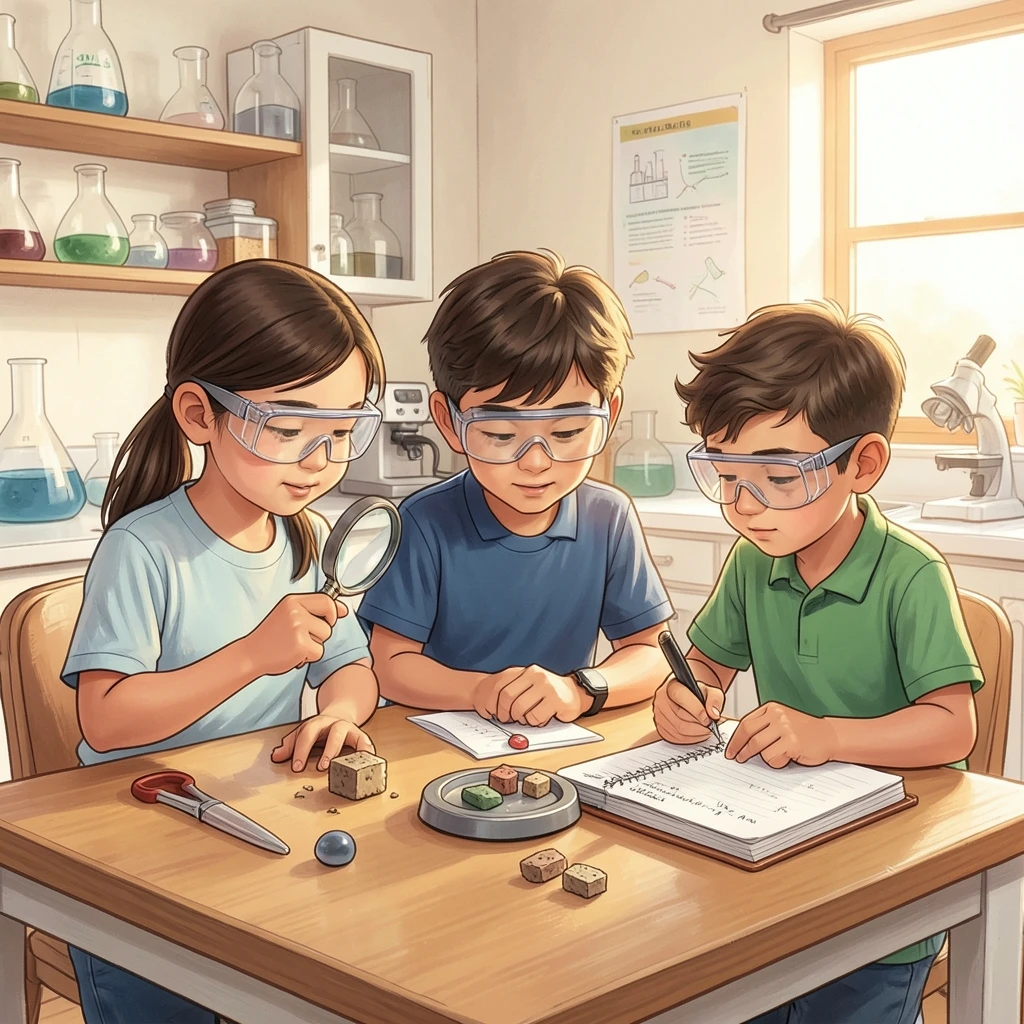
A quick look inside this lesson
What happens in class?
Question to start with
Could two different materials look the same?
What students actually do
Record appearance, magnetic response and one approved physical test.
Evidence of learning
Evidence-based reasoning without overclaiming certainty.
Lesson plan
Mystery Materials: Identify Unknown Substances with Evidence
A step-by-step guide to help you teach this lesson.
Extra context for teachers
Science notes: Mystery Materials: Identify Unknown Substances with Evidence
A short concept refresher and teaching perspective. The full procedure, printable materials, and student tasks are available in the lesson resources above.
Science in context
Build a material fingerprint
Imagine three classroom-prepared sample cards. Sample A is shiny, responds to a magnet, and does not dissolve in water. Sample B is shiny, does not respond to a magnet, and does not dissolve. Sample C is dull, is not attracted to a magnet, and dissolves in water. Which tests separate all three?
How to avoid a false clue
A white powder could be sugar, salt, or another safe classroom substance. Looking alone may not tell you which. Never taste powders to identify them.
What makes the idea observable?
Three coded samples look similar from far away. Could a magnet, magnifier and careful water test help tell them apart?
Never use tasting, smelling or direct contact with unknowns. Only a teacher-selected set of safe known substances should be coded for students.
A misconception worth addressing
- Shiny does not always mean magnetic.
- Dissolved material has not vanished.
Teacher tip
- Provide a printed reference table with property icons and sample test pictures.
- Use claim–evidence–reasoning sentence frames.
Verified curriculum references
Plan with confidence
Lesson overview
What students will learn
- Record consistent observations of at least three properties of unknown safe materials.
- Use a table of test results to identify a material and explain which clues support the decision.
Key science ideas
- Color and shine are useful observations, but different materials can look alike.
- A magnet attracts some metals, such as iron or steel; it does not attract every metal.
- Solubility means whether a substance dissolves in a specified liquid at a specified temperature.
Lesson at a glance
- Grade 5
- 55 min
- ~15 min prep
- 5-PS1-3
- 8 materials
What’s included
- Lesson Plan
- Investigation
- Teacher Slides
- Printable Worksheet
- Teacher Answer Key
- Interactive Activity
- Vocabulary