Physical Science · Matter & Properties
Acids & Bases: Properties, Indicators & pH
Use safe indicator evidence to compare acidic, neutral, and basic solutions and interpret the pH scale without relying on taste or touch.
Read the science notes ↓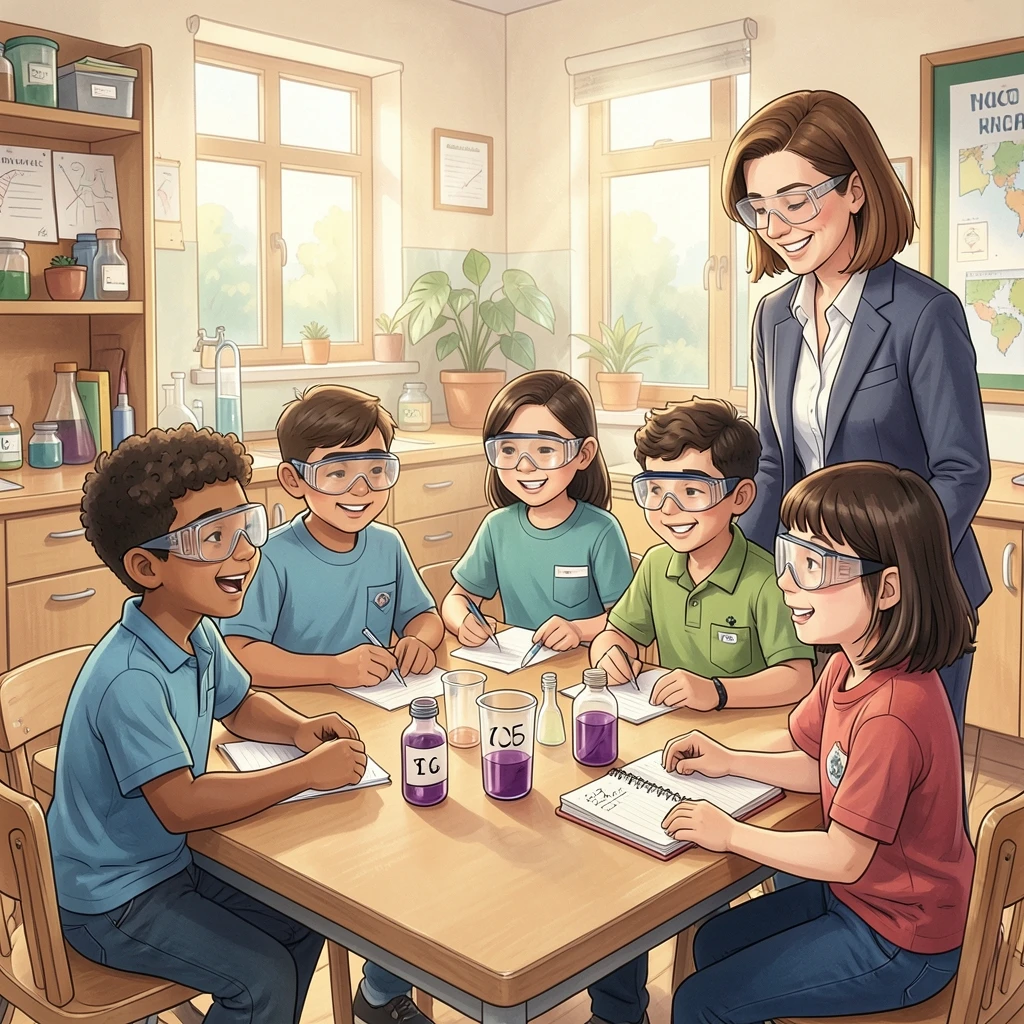
A quick look inside this lesson
What happens in class?
Question to start with
What safe test could reveal a hidden property?
What students actually do
Observe and record color changes.
Evidence of learning
Correct scale reasoning.
Lesson plan
Acids & Bases: Properties, Indicators & pH
A step-by-step guide to help you teach this lesson.
Extra context for teachers
Science notes: Acids & Bases: Properties, Indicators & pH
A short concept refresher and teaching perspective. The full procedure, printable materials, and student tasks are available in the lesson resources above.
Science in context
pH is a scale, not a safety label
The pH scale helps describe acidic and basic conditions, but a pH value alone does not tell you whether a substance is safe to handle.
What makes the idea observable?
Three clear liquids look alike before testing, but the indicator produces three different colors. What kind of evidence can the color changes provide?
Use a known indicator reference to compare the samples rather than guessing from appearance.
A misconception worth addressing
- pH is not a direct safety scale.
- Clear appearance does not mean neutral.
Teacher tip
- Provide a three-zone pH reference: below 7, 7, above 7.
- Use sentence frames: The sample is ___ because the evidence shows ___.
Verified curriculum references
Plan with confidence
Lesson overview
What students will learn
- Use indicator color changes as evidence to classify safe solutions as acidic, neutral, or basic.
- Interpret pH values as a scale from acidic through neutral to basic.
Key science ideas
- Acids and bases can look similar, so scientists use tests rather than taste or touch.
- An indicator changes color depending on the solution's chemical conditions.
- On the pH scale, values below 7 are acidic, 7 is neutral, and values above 7 are basic.
Lesson at a glance
- Grade 5
- 50 min
- ~12 min prep
- 7 materials
What’s included
- Lesson Plan
- Investigation
- Teacher Slides
- Printable Worksheet
- Teacher Answer Key
- Interactive Activity
- Vocabulary