Earth Science · Earth's Water Systems
How Water Moves Underground: Infiltration, Permeability & Aquifers
Model how water infiltrates Earth materials, compare permeability, and explain how groundwater can collect and move through aquifers.
Read the science notes ↓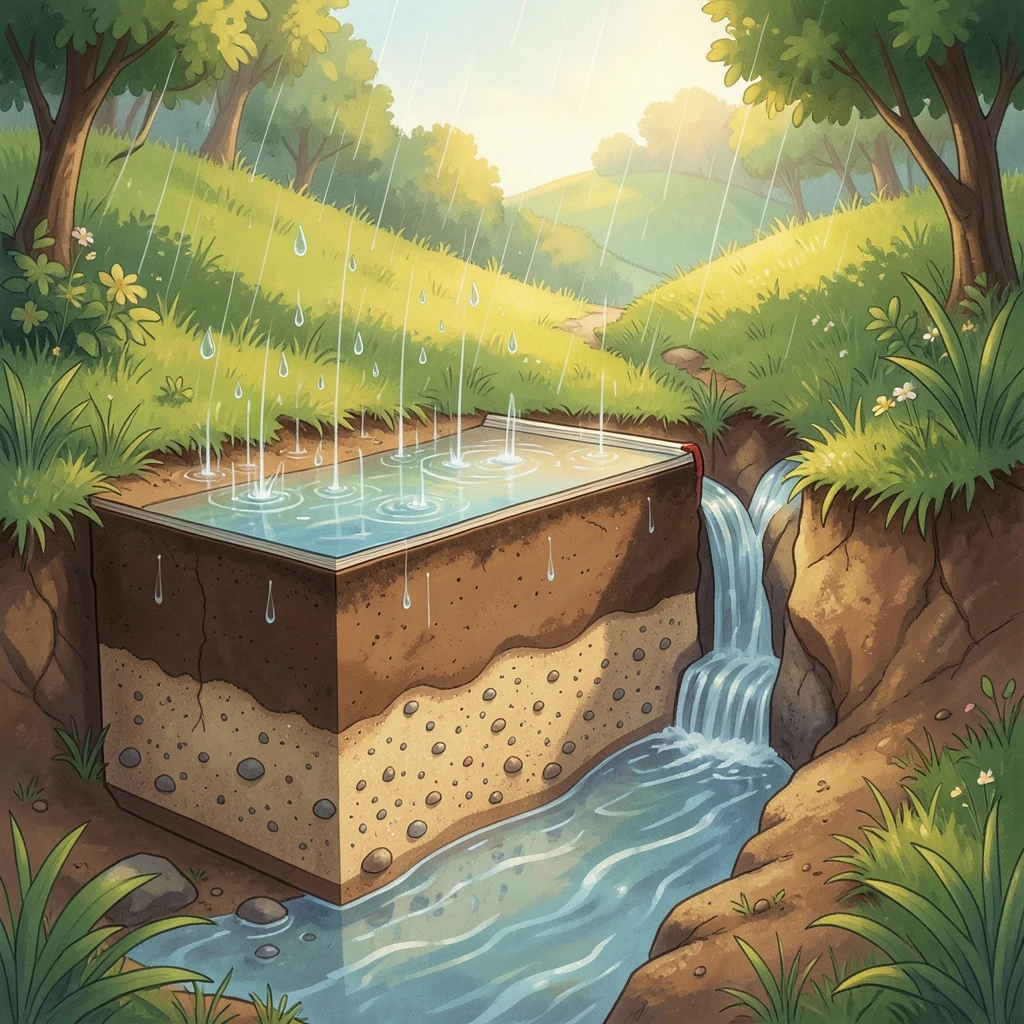
A quick look inside this lesson
What happens in class?
Question to start with
What property of the material might affect water movement?
What students actually do
Observe infiltration and compare water passage through each column.
Evidence of learning
Accurate vocabulary and model limits.
Lesson plan
How Water Moves Underground: Infiltration, Permeability & Aquifers
A step-by-step guide to help you teach this lesson.
Extra context for teachers
Science notes: How Water Moves Underground: Infiltration, Permeability & Aquifers
A short concept refresher and teaching perspective. The full procedure, printable materials, and student tasks are available in the lesson resources above.
Science in context
A model shows the path, not every underground detail
A classroom column of gravel, sand, or clay can model differences in permeability. The particles are much larger and simpler than real underground layers, but the model can still reveal how connected spaces affect water movement.
What makes the idea observable?
After the same rainstorm, one patch of ground absorbs water quickly while another stays puddled. What properties of the ground could change where the water goes?
Focus on the size and connection of spaces between particles rather than assuming all soil absorbs water equally.
A misconception worth addressing
- Aquifers are not usually giant empty underground lakes.
- Porosity and permeability are related but not identical.
Teacher tip
- Use a three-step visual: surface water → infiltration → groundwater.
- Provide sentence frames: Water moved faster through ___ because ___.
Verified curriculum references
Plan with confidence
Lesson overview
What students will learn
- I can explain infiltration as water moving from the surface into soil or rock.
- I can compare how quickly water moves through Earth materials with different permeability.
Key science ideas
- Infiltration begins when surface water enters pores or cracks in soil, sediment, or rock.
- Permeable materials have connected spaces that allow water to move through more easily.
- Groundwater fills spaces and cracks below the surface; it is not usually a giant underground lake.
Lesson at a glance
- Grade 5
- 50 min
- ~12 min prep
- 8 materials
What’s included
- Lesson Plan
- Investigation
- Teacher Slides
- Printable Worksheet
- Teacher Answer Key
- Interactive Activity
- Vocabulary