Earth Science · Earth Systems
Earth's Systems Working Together
Classify Earth components and build focused models of interactions between two systems.
Read the science notes ↓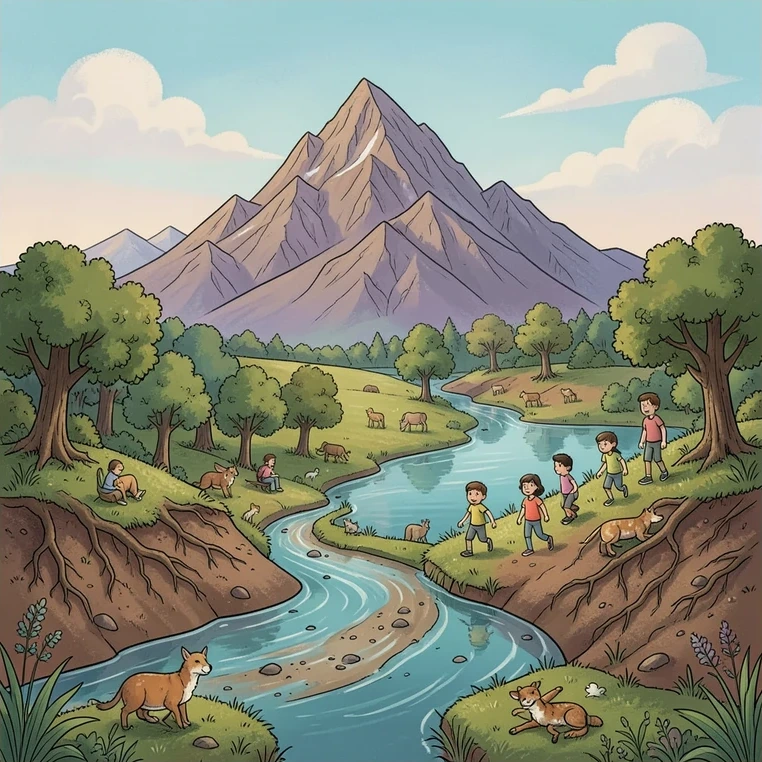
A quick look inside this lesson
What happens in class?
Question to start with
What is each component?
What students actually do
Classify all eight and build an arrow.
Evidence of learning
Focused repair.
Lesson plan
Earth's Systems Working Together
A step-by-step guide to help you teach this lesson.
Extra context for teachers
Science notes: Earth's Systems Working Together
A short concept refresher and teaching perspective. The full procedure, printable materials, and student tasks are available in the lesson resources above.
Science in context
Predict without overclaiming
More or faster modeled flow may increase soil movement if other conditions stay similar.
What makes the idea observable?
Moving river water carries soil from a bank. Which components and systems interact?
Model hydrosphere → geosphere and label the arrow: moving water erodes or carries some soil.
A misconception worth addressing
- Systems do not become one another.
- Arrows need meanings.
Teacher tip
- Color-code categories.
- Provide component icons.
Verified curriculum references
Plan with confidence
Lesson overview
What students will learn
- Classify specific Earth components as part of the geosphere, hydrosphere, atmosphere, or biosphere.
- Build a model that shows a specific interaction between two Earth systems and gives each arrow a clear meaning.
Key science ideas
- River water and glacier ice are hydrosphere components.
- Hillside soil and mountain rock are geosphere components.
- Tree roots and fish are biosphere components.
Lesson at a glance
- Grade 5
- 55 min
- ~10 min prep
- 5-ESS2-1
- 6 materials
What’s included
- Lesson Plan
- Investigation
- Teacher Slides
- Printable Worksheet
- Teacher Answer Key
- Interactive Activity
- Vocabulary