Earth Science · Natural Resources and Energy
Renewable Energy: Choosing Sources for a School
Compare sunlight, wind and fossil fuel energy sources using local conditions, reliability, land needs and environmental effects; defend a school-energy decision with evidence.
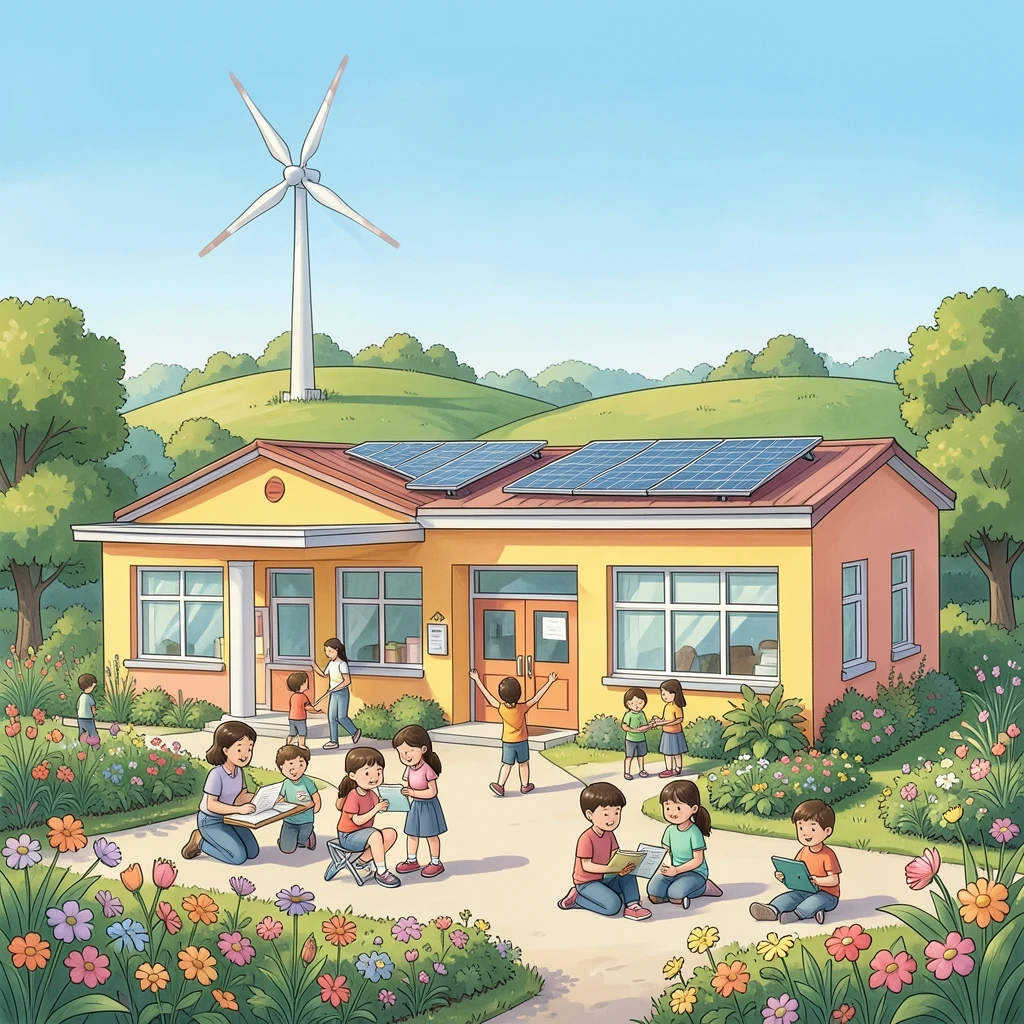
Lesson plan
Renewable Energy: Choosing Sources for a School
A step-by-step guide to help you teach this lesson.
Plan with confidence
Lesson overview
What students will learn
- Identify sunlight, moving air and fossil fuels as sources of energy used by people, and distinguish renewable and nonrenewable resources.
- Compare two proposed school energy options using observation data and stated environmental trade-offs.
Key science ideas
- Solar panels can convert light from sunlight into electrical energy, but output varies with daylight, cloud cover and panel placement.
- Wind turbines can convert moving-air energy into electricity, but output varies with wind and site conditions.
- Fossil fuels are nonrenewable on human timescales; burning them produces air pollution and greenhouse gases.
Lesson at a glance
- Grade 4
- 45 min
- ~12 min prep
- 4-ESS3-1
- 5 materials
What’s included
- Lesson Plan
- Investigation
- Teacher Slides
- Printable Worksheet
- Teacher Answer Key
- Interactive Activity
- Vocabulary