Physical Science · Energy
Energy Transfer
Use observations as evidence that energy can move from place to place through sound, light, heat, and electric currents.
Read the science notes ↓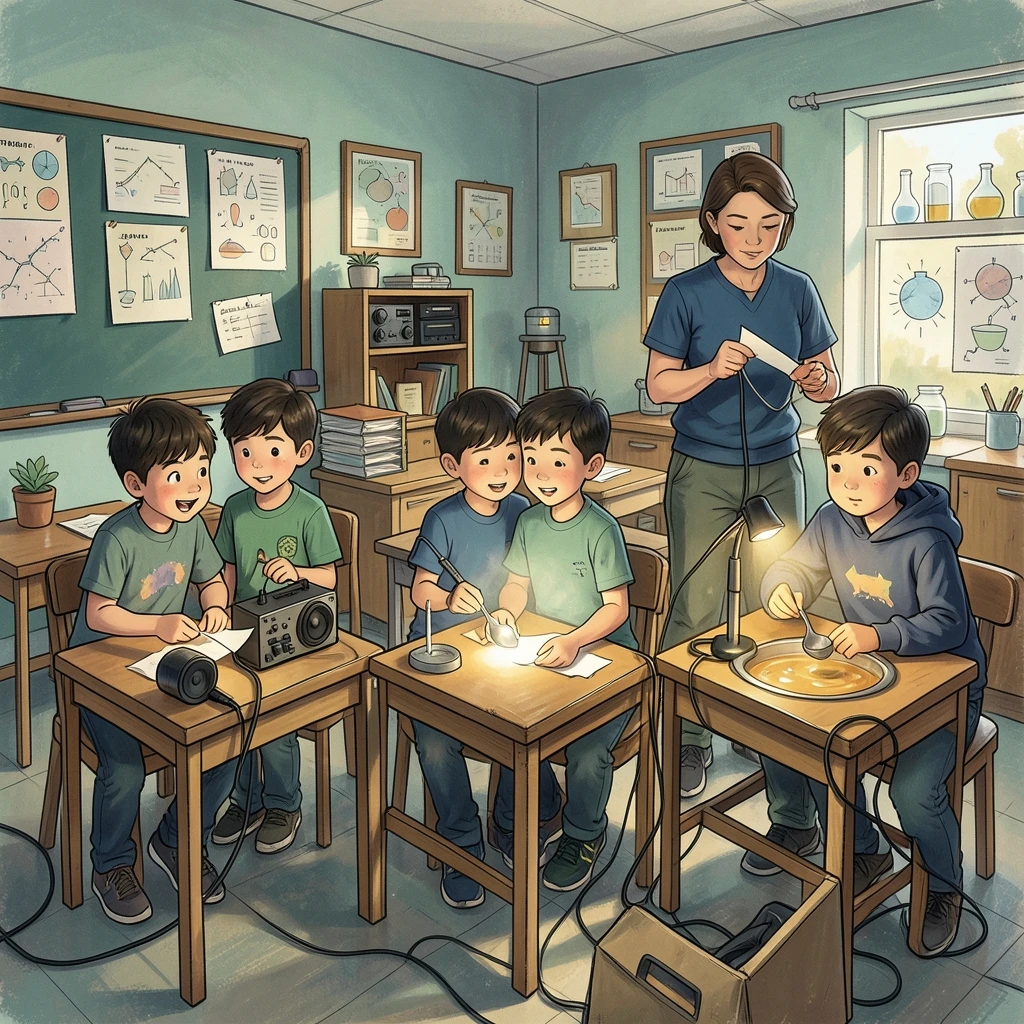
A quick look inside this lesson
What happens in class?
Question to start with
What changed?
What students actually do
Act before revealing each result, then record source, pathway, and evidence.
Evidence of learning
A scientifically reasonable pathway plus an observed effect.
Lesson plan
Energy Transfer
A step-by-step guide to help you teach this lesson.
Extra context for teachers
Science notes: Energy Transfer
A short concept refresher and teaching perspective. The full procedure, printable materials, and student tasks are available in the lesson resources above.
Science in context
Energy transfer is not the same as a list of energy types
Focus on a change from source → transfer → observed effect. For example, a speaker produces sound and a nearby lightweight strip vibrates.
What makes the idea observable?
For each example, identify a source, a transfer path, and an observable change at the receiving object or place.
A strong explanation names what changed and why that observation is evidence of energy transfer.
A misconception worth addressing
- Energy is not a substance that can be seen moving like a material object.
- A list of 'types of energy' is not enough; students need transfer evidence.
Teacher tip
- Use four consistent icons for sound, light, heat, and electric current.
- Provide a source → pathway → evidence sentence frame.
Verified curriculum references
Plan with confidence
Lesson overview
What students will learn
- Make observations that provide evidence energy moved from a source to another place or object.
- Trace energy transfer through sound, light, heat, and electric-current examples.
Key science ideas
- Sound can transfer energy and make another object vibrate.
- Light can transfer energy from a source to another place or object.
- Energy can transfer because of temperature differences, making a cooler object warmer.
Lesson at a glance
- Grade 4
- 45 min
- ~10 min prep
- 4-PS3-2
- 8 materials
What’s included
- Lesson Plan
- Investigation
- Teacher Slides
- Printable Worksheet
- Teacher Answer Key
- Interactive Activity
- Vocabulary