Life Science · Animals Change Habitats
Beaver Dams: How Can One Animal Change a Habitat?
Study how beaver dams can change stream water and wetland habitat, compare species responses and assess coexistence solutions.
Read the science notes ↓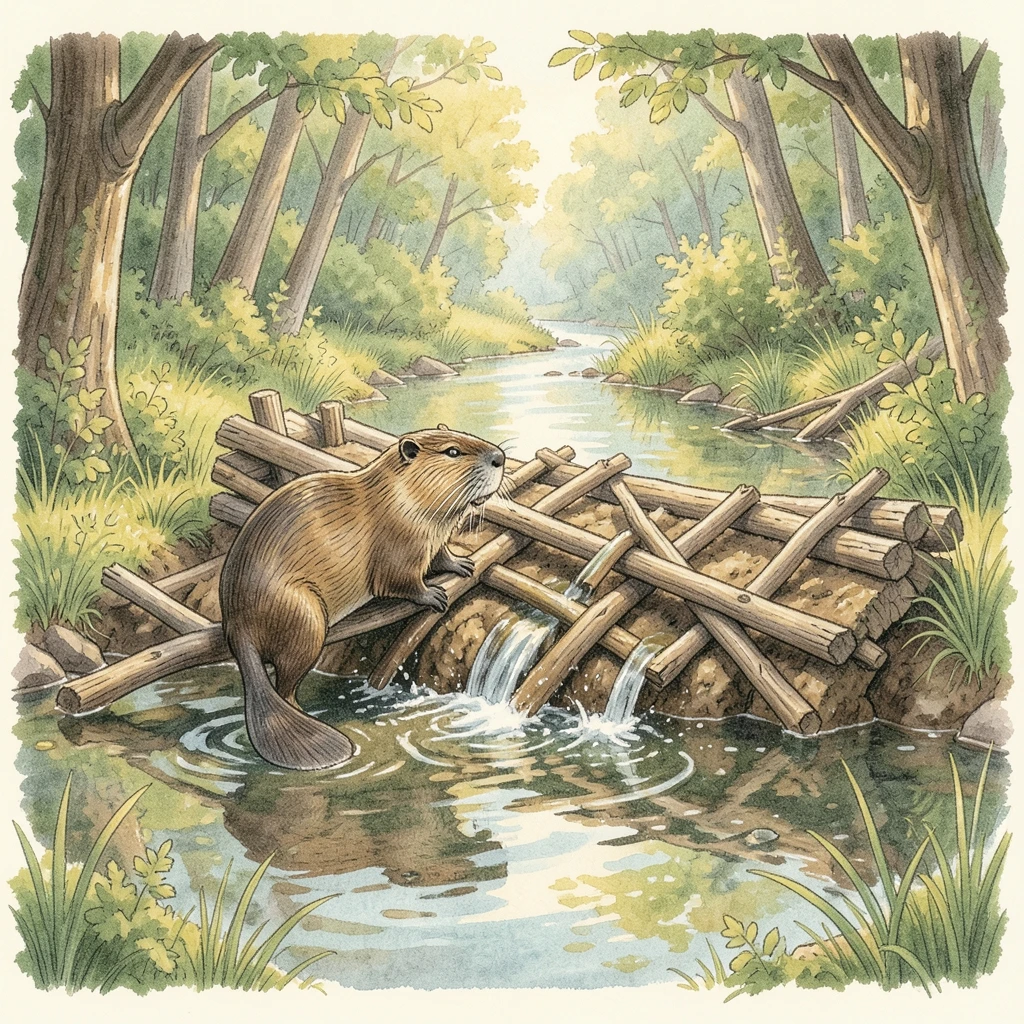
A quick look inside this lesson
What happens in class?
Question to start with
What changed in the creek?
What students actually do
Identify changing water.
Evidence of learning
One physical cause, two responses, an evidence limitation.
Lesson plan
Beaver Dams: How Can One Animal Change a Habitat?
A step-by-step guide to help you teach this lesson.
Extra context for teachers
Science notes: Beaver Dams: How Can One Animal Change a Habitat?
A short concept refresher and teaching perspective. The full procedure, printable materials, and student tasks are available in the lesson resources above.
Science in context
Beavers as ecosystem engineers
Ecosystem engineers change physical habitat features. Beaver-built dams may turn part of a stream into a calm pond and change where water collects.
A coexistence problem
When an upstream pond reaches a walking path, trained adults may investigate safe water management while protecting important wetland habitat.
What makes the idea observable?
Compare a narrow flowing creek with a pond that formed upstream after a beaver built a dam. What changed, and how can we tell?
Observe water depth, width and current rather than assuming every organism benefits.
A misconception worth addressing
- Dams need not block all downstream water.
- Not every beaver builds dams.
Teacher tip
- Use upstream/downstream arrow cards.
- Provide simple claim-evidence starters.
Verified curriculum references
Plan with confidence
Lesson overview
What students will learn
- Describe how some beaver dams affect local water flow and the upstream pond.
- Explain why one habitat change may help some species and challenge others.
Key science ideas
- Some beavers build dams; not all beavers in all habitats need dams.
- A dam can slow local water and create a pond upstream.
- Shallow wetland edges may benefit some frogs and water birds.
Lesson at a glance
- Grade 3
- 45 min
- ~12 min prep
- 4 materials
What’s included
- Lesson Plan
- Investigation
- Teacher Slides
- Printable Worksheet
- Teacher Answer Key
- Interactive Activity
- Vocabulary