Life Science · Animal Diversity
Animal Classification: Vertebrates & Invertebrates
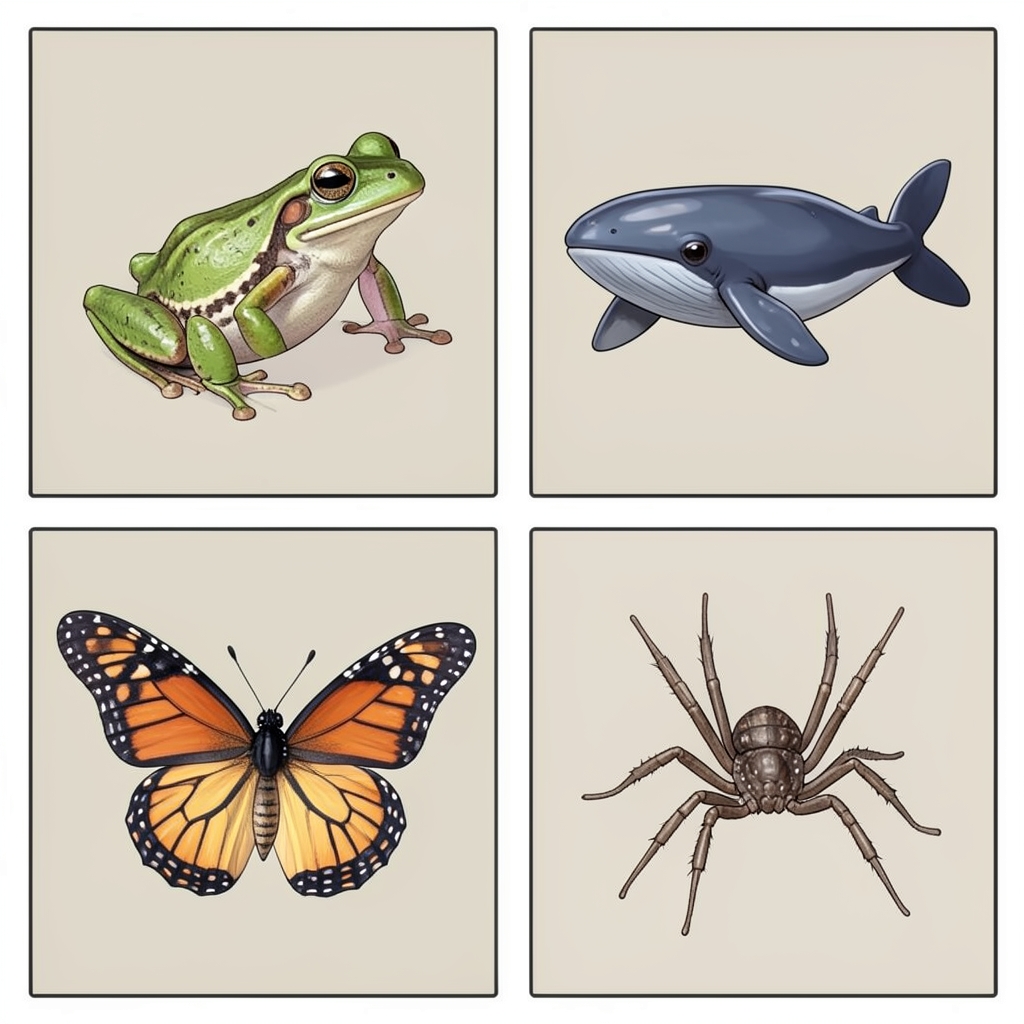
Use body-structure evidence to classify animals as vertebrates or invertebrates and then compare familiar groups such as mammals, birds, insects, arachnids, mollusks, and crustaceans.
Lesson plan
Animal Classification: Vertebrates & Invertebrates
A step-by-step guide to help you teach this lesson.
Plan with confidence
Lesson overview
What students will learn
- Classify animals as vertebrates or invertebrates using backbone evidence.
- Use body features to place familiar animals into smaller classification groups.
Key science ideas
- Vertebrates have a backbone; invertebrates do not.
- Backbone evidence is more useful than size, habitat, or whether an animal can fly.
- Common vertebrate groups include mammals, birds, reptiles, amphibians, and fishes.
Lesson at a glance
- Grade 3
- 45 min
- ~10 min prep
- 4 materials
What’s included
- Lesson Plan
- Investigation
- Teacher Slides
- Printable Worksheet
- Teacher Answer Key
- Interactive Activity
- Vocabulary