Life Science · Animal Diversity
Animal Classification: Vertebrates & Invertebrates
Use body-structure evidence to classify animals as vertebrates or invertebrates and then compare familiar groups such as mammals, birds, insects, arachnids, mollusks, and crustaceans.
Read the science notes ↓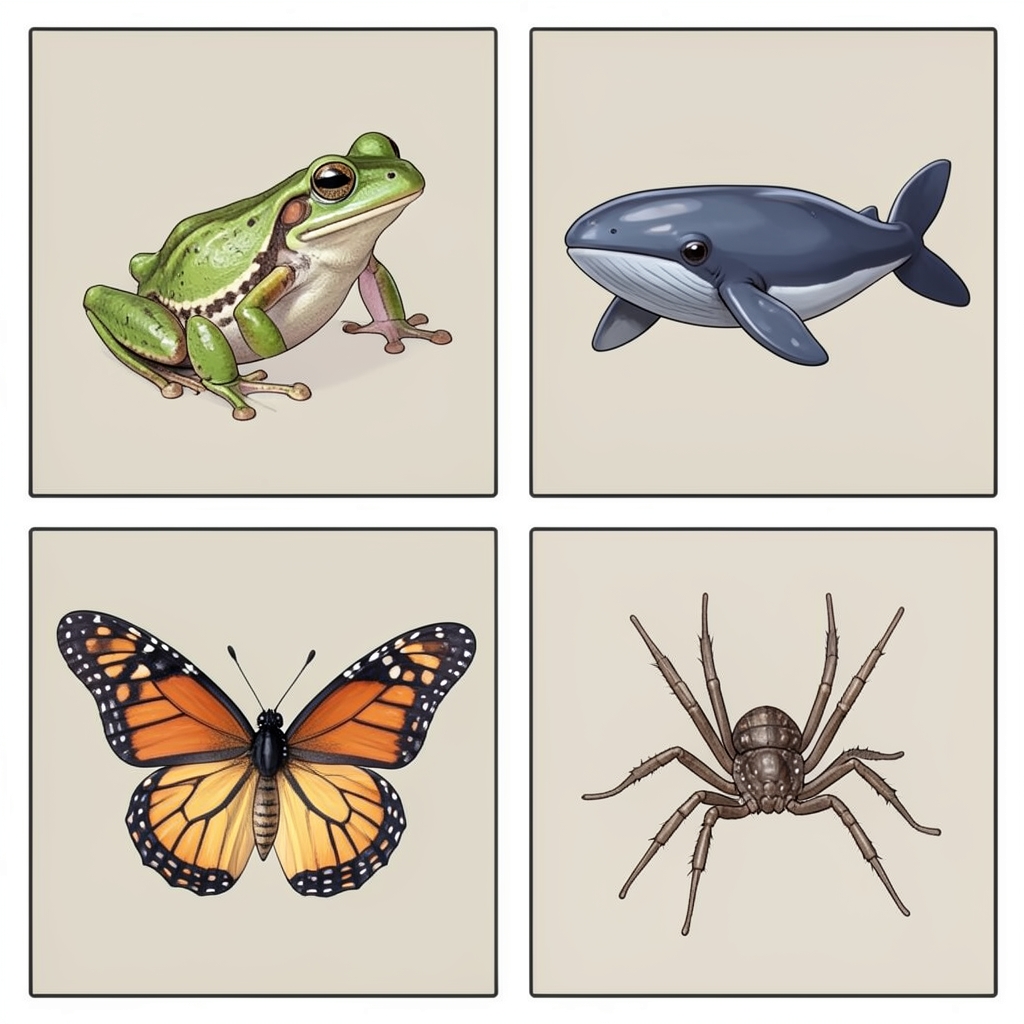
A quick look inside this lesson
What happens in class?
Question to start with
Which rule uses body structure instead of habitat or size?
What students actually do
Sort animals into backbone/no-backbone groups.
Evidence of learning
Backbone first; additional structural features next.
Lesson plan
Animal Classification: Vertebrates & Invertebrates
A step-by-step guide to help you teach this lesson.
Extra context for teachers
Science notes: Animal Classification: Vertebrates & Invertebrates
A short concept refresher and teaching perspective. The full procedure, printable materials, and student tasks are available in the lesson resources above.
Science in context
A simple classification key
First ask whether the animal has a backbone. That separates vertebrates from invertebrates.
What makes the idea observable?
A bat flies and a bird flies. Are they in the same smaller animal group?
Both are vertebrates, but a bat is a mammal and a bird is a bird. Use several structural characteristics rather than one behavior.
A misconception worth addressing
- Wings do not automatically mean bird.
- A shell does not automatically mean vertebrate.
Teacher tip
- Use body-feature icons and backbone x-ray cards.
- Provide a two-step decision frame: backbone? then smaller-group features.
Verified curriculum references
Plan with confidence
Lesson overview
What students will learn
- Classify animals as vertebrates or invertebrates using backbone evidence.
- Use body features to place familiar animals into smaller classification groups.
Key science ideas
- Vertebrates have a backbone; invertebrates do not.
- Backbone evidence is more useful than size, habitat, or whether an animal can fly.
- Common vertebrate groups include mammals, birds, reptiles, amphibians, and fishes.
Lesson at a glance
- Grade 3
- 45 min
- ~10 min prep
- 4 materials
What’s included
- Lesson Plan
- Investigation
- Teacher Slides
- Printable Worksheet
- Teacher Answer Key
- Interactive Activity
- Vocabulary