Earth Science · Water on Earth
Water on Earth: Oceans, Rivers, Lakes, Ponds & Ice
Use pictures, labels, captions, and short text to identify water locations and states.
Read the science notes ↓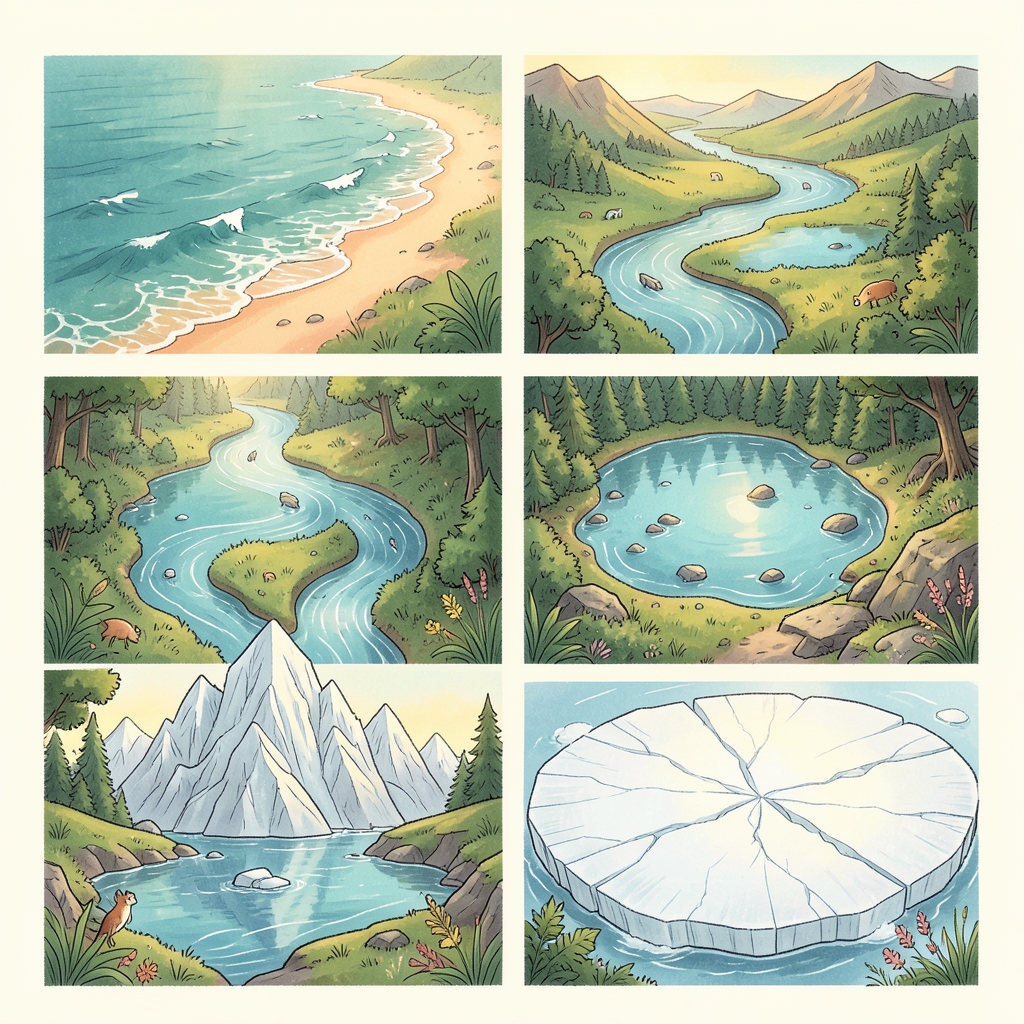
A quick look inside this lesson
What happens in class?
Question to start with
What information could help?
What students actually do
Identify places.
Evidence of learning
Not color-only.
Lesson plan
Water on Earth: Oceans, Rivers, Lakes, Ponds & Ice
A step-by-step guide to help you teach this lesson.
Extra context for teachers
Science notes: Water on Earth: Oceans, Rivers, Lakes, Ponds & Ice
A short concept refresher and teaching perspective. The full procedure, printable materials, and student tasks are available in the lesson resources above.
Science in context
Build an evidence board
Sort all six named cards as liquid water or solid ice.
What makes the idea observable?
What do the picture and text feature tell you about place and state?
Do not turn the lesson into the full water cycle or reservoir percentages.
A misconception worth addressing
- Ice is water.
- Not everything blue is water or white is ice.
Teacher tip
- Read captions aloud.
- Use large state icons.
Verified curriculum references
Plan with confidence
Lesson overview
What students will learn
- Use pictures, labels, captions, and short text to identify places where water is found on Earth.
- Classify water in the lesson evidence as liquid water or solid ice and support the classification with information from the source.
Key science ideas
- Oceans, rivers, lakes, and ponds show liquid water in these sources.
- Glaciers and ice caps show solid ice.
- Headings, captions, icons, labels, pictures, and maps provide information.
Lesson at a glance
- Grade 2
- 40 min
- ~7 min prep
- 2-ESS2-3
- 2 materials
What’s included
- Lesson Plan
- Investigation
- Teacher Slides
- Printable Worksheet
- Teacher Answer Key
- Interactive Activity
- Vocabulary