Life Science · Plants and Patterns
Seed to Seedling: How Germination Begins
Observe bean seeds over several days, compare damp and dry setups, and use visible changes to explain what helps germination begin.
Read the science notes ↓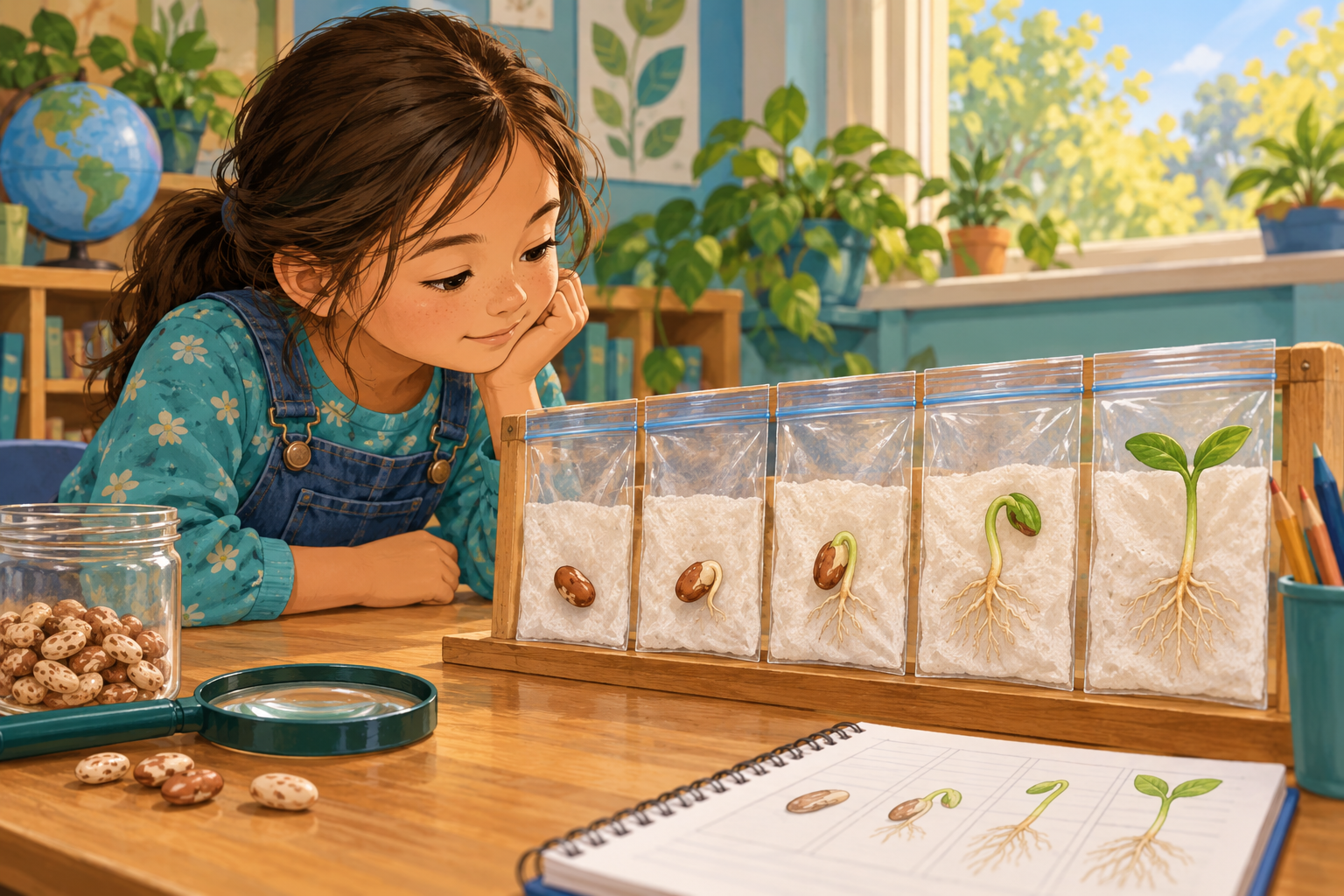
A quick look inside this lesson
What happens in class?
Question to start with
What changed?
What students actually do
Label setups, make a prediction, and record starting observations.
Evidence of learning
Claim about the tested conditions, not an overgeneralization.
Lesson plan
Seed to Seedling: How Germination Begins
A step-by-step guide to help you teach this lesson.
Extra context for teachers
Science notes: Seed to Seedling: How Germination Begins
A short concept refresher and teaching perspective. The full procedure, printable materials, and student tasks are available in the lesson resources above.
Science in context
Use the comparison as evidence
A fair classroom comparison uses the same kind of seed, the same container, and the same location. One setup receives water and the other stays dry.
What makes the idea observable?
Two bean seeds started the same size. One has been on a damp paper towel for three days. The other stayed dry. What changes can you actually see?
Look for a split seed coat, a small white root, or a green shoot. Describe only what is visible before explaining why it happened.
A misconception worth addressing
- Seeds need light before any germination can begin.
- Every seed germinates on the same day.
Teacher tip
- Use real seeds plus enlarged visual stages.
- Offer the frame: I observed ___. This is evidence that ___.
Verified curriculum references
Plan with confidence
Lesson overview
What students will learn
- I can put germination observations in order from seed to seedling.
- I can compare a damp and dry setup and use evidence to explain why one seed begins to germinate.
Key science ideas
- A seed contains a young plant and stored food inside a protective coat.
- Most seeds need water, air, and a suitable temperature to begin germinating.
- The first visible part is often a root. A shoot grows later.
Lesson at a glance
- Grade 1
- 40 min
- ~12 min prep
- 7 materials
What’s included
- Lesson Plan
- Investigation
- Teacher Slides
- Printable Worksheet
- Teacher Answer Key
- Interactive Activity
- Vocabulary