Life Science · Plant Structures
Plant Parts & Their Jobs: Roots, Stems, Leaves & Flowers
Look closely at a whole plant, connect roots, stems, leaves, flowers, and fruits to useful jobs, then use observations from a simple stem-water investigation as evidence.
Read the science notes ↓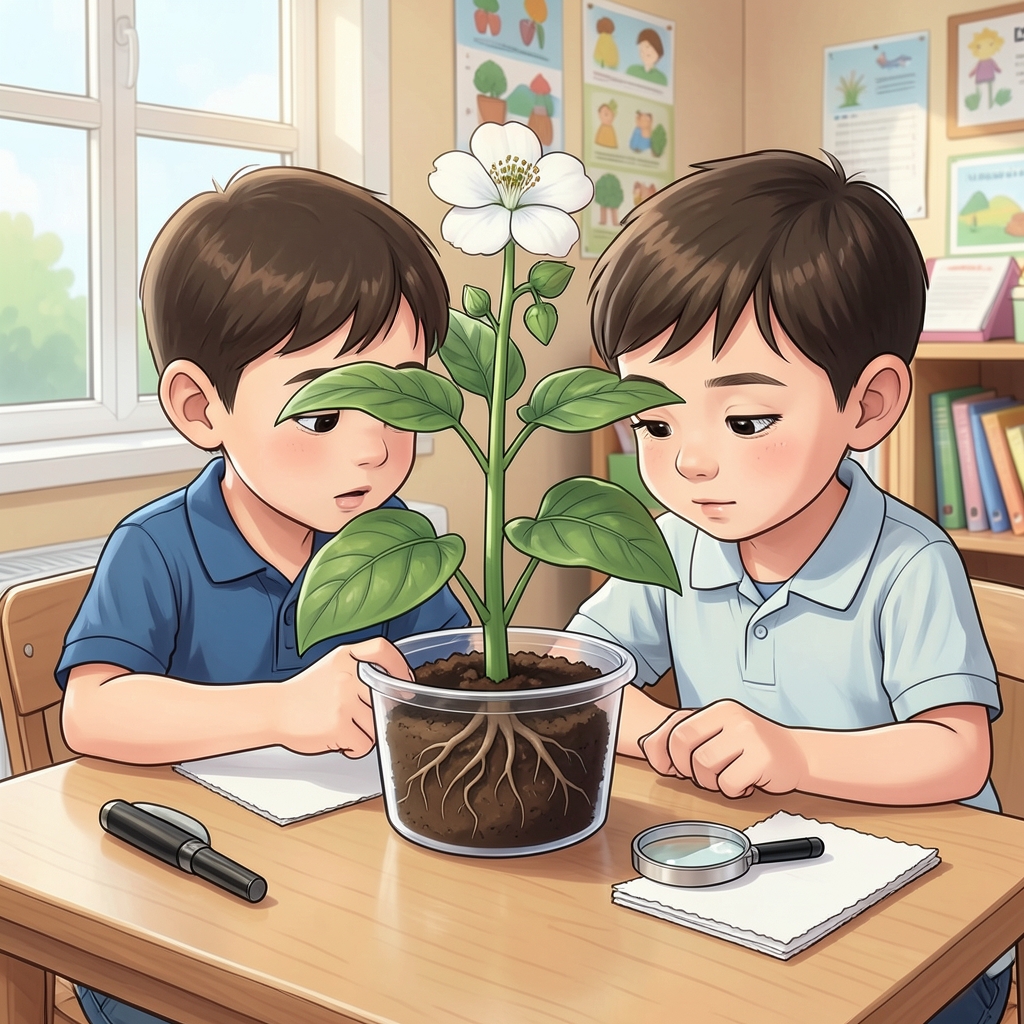
A quick look inside this lesson
What happens in class?
Question to start with
What is above the soil?
What students actually do
Match parts to jobs and notice where colored water appears.
Evidence of learning
Part → job → evidence.
Lesson plan
Plant Parts & Their Jobs: Roots, Stems, Leaves & Flowers
A step-by-step guide to help you teach this lesson.
Extra context for teachers
Science notes: Plant Parts & Their Jobs: Roots, Stems, Leaves & Flowers
A short concept refresher and teaching perspective. The full procedure, printable materials, and student tasks are available in the lesson resources above.
Science in context
First graders often identify a flower or leaf by its appearance before they understand what that structure helps the plant do. A more useful question is how roots, stems, leaves and reproductive structures contribute to one living system. Roots can absorb water and anchor the plant; stems support above-ground structures and transport water; leaves use light to help the plant make sugars.
Plant-part jobs overlap, and different plants do not always look like the same textbook diagram. A stem that carries dyed water provides one visible clue about transport, but the dye is only a tracer. It does not mean leaves normally drink water directly from a cup, or that roots alone move water through the entire plant.
Science reference: USGS — How plants move water (transpiration)
What makes the idea observable?
Which plant parts can you find? What clue helps you tell what job each part may do?
Use visible evidence: roots spread through soil, stems hold parts up, leaves face light, flowers form near developing seeds or fruits.
A misconception worth addressing
- Do not say roots are the only parts that move water.
- Do not imply leaves drink water directly from the cup.
A practical teaching move
Show two different plants rather than only one idealized diagram. Have students identify a part and explain its likely job from an observation before supplying the science vocabulary.
Verified curriculum references
Plan with confidence
Lesson overview
What students will learn
- Identify roots, stems, leaves, flowers, and fruits on familiar plants.
- Describe one useful job for each major plant part using picture or real-plant evidence.
Key science ideas
- Roots can anchor a plant and take in water from the soil.
- Stems support leaves and flowers and can carry water upward.
- Leaves catch light and help the plant make food.
Lesson at a glance
- Grade 1
- 38 min
- ~10 min prep
- 6 materials
What’s included
- Lesson Plan
- Investigation
- Teacher Slides
- Printable Worksheet
- Teacher Answer Key
- Interactive Activity
- Vocabulary