Life Science · Families & Traits
How Parents and Young Help Each Other
Use picture and text media to find patterns in observable behaviors between animal parents and young.
Read the science notes ↓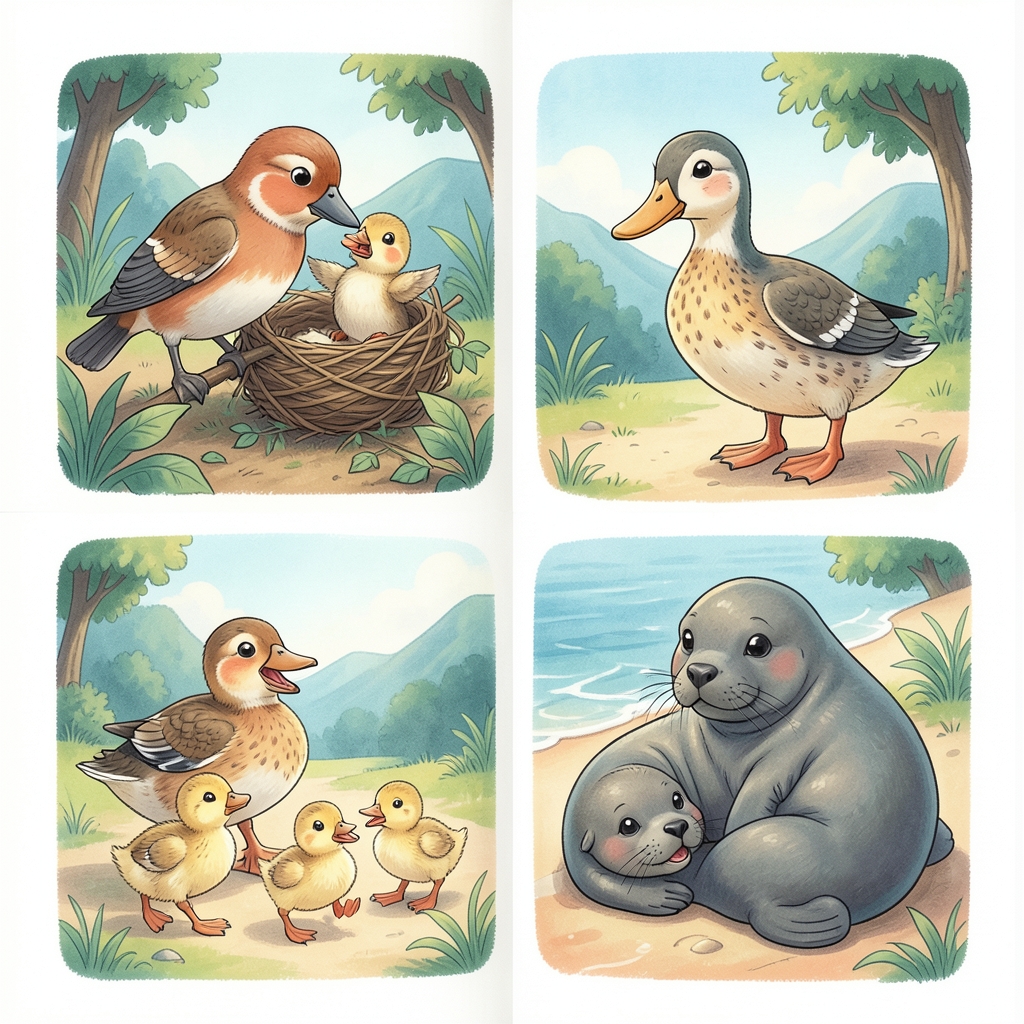
A quick look inside this lesson
What happens in class?
Question to start with
What happened?
What students actually do
Build three chains.
Evidence of learning
No every-species claim.
Lesson plan
How Parents and Young Help Each Other
A step-by-step guide to help you teach this lesson.
Extra context for teachers
Science notes: How Parents and Young Help Each Other
A short concept refresher and teaching perspective. The full procedure, printable materials, and student tasks are available in the lesson resources above.
Science in context
Pattern and limit
Compare at least three stories before naming a repeated pattern.
What makes the idea observable?
What action happened, what response followed, and how could it help the young?
Use non-human examples without claiming unsupported intentions.
A misconception worth addressing
- Do not infer human-like intentions.
- One story does not prove all species behave the same.
Teacher tip
- Read text aloud.
- Allow pointing and oral responses.
Verified curriculum references
Plan with confidence
Lesson overview
What students will learn
- Identify a pattern in behaviors between animal parents and their young using picture and text evidence.
- Explain how a parent or young animal behavior can help the young animal get food, stay safe, or meet another survival need.
Key science ideas
- A nestling cheeps and opens its beak; a parent brings food.
- An adult duck calls; ducklings move toward the adult.
- A young seal calls and moves; its parent approaches and provides care.
Lesson at a glance
- Grade 1
- 35 min
- ~8 min prep
- 1-LS1-2
- 3 materials
What’s included
- Lesson Plan
- Investigation
- Teacher Slides
- Printable Worksheet
- Teacher Answer Key
- Interactive Activity
- Vocabulary