Life Science · Ecosystems & Interdependence
Ecosystem Relationships: Competition, Predation & Mutualism
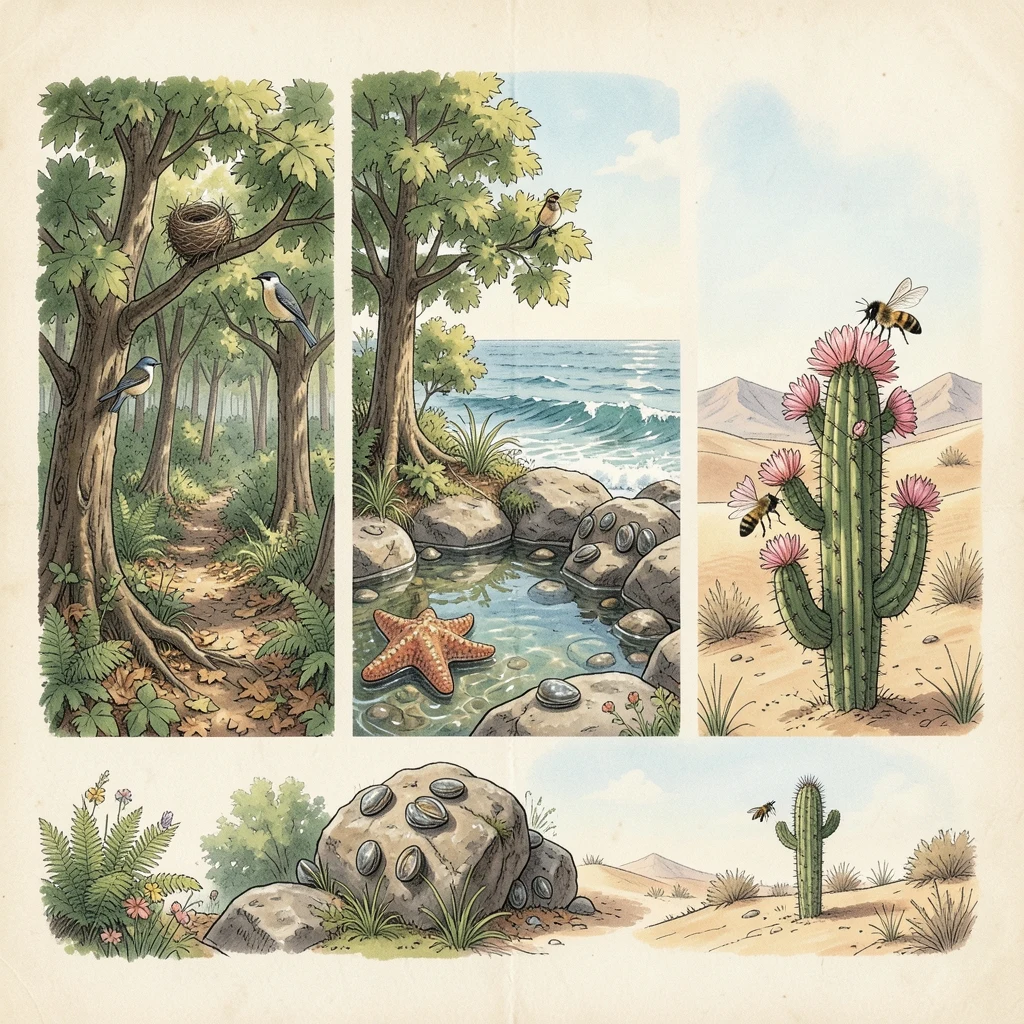
Compare evidence from woodland, tide-pool and desert examples to identify and predict recurring ecological interaction patterns across different ecosystems.
Lesson plan
Ecosystem Relationships: Competition, Predation & Mutualism
A step-by-step guide to help you teach this lesson.
Plan with confidence
Lesson overview
What students will learn
- Identify competition, predation and mutualism from what each organism gains or loses, rather than from appearances alone.
- Construct an evidence-based prediction about a similar interaction in a different ecosystem.
Key science ideas
- Competition occurs when organisms' resource use overlaps and the resource is limited; competitors need not fight.
- In predation, a predator consumes prey. A dramatic chase is not required, and predators are not 'bad' organisms.
- In mutualism, both partners receive a benefit. The effect must be supported by observations, not assumed from being near each other.
Lesson at a glance
- Grade 6
- 55 min
- ~10 min prep
- MS-LS2-2
- 4 materials
What’s included
- Lesson Plan
- Investigation
- Teacher Slides
- Printable Worksheet
- Teacher Answer Key
- Interactive Activity
- Vocabulary