Life Science · Information Processing
Senses, Brain & Responses
Construct and repair visual and sound information-pathway models.
Read the science notes ↓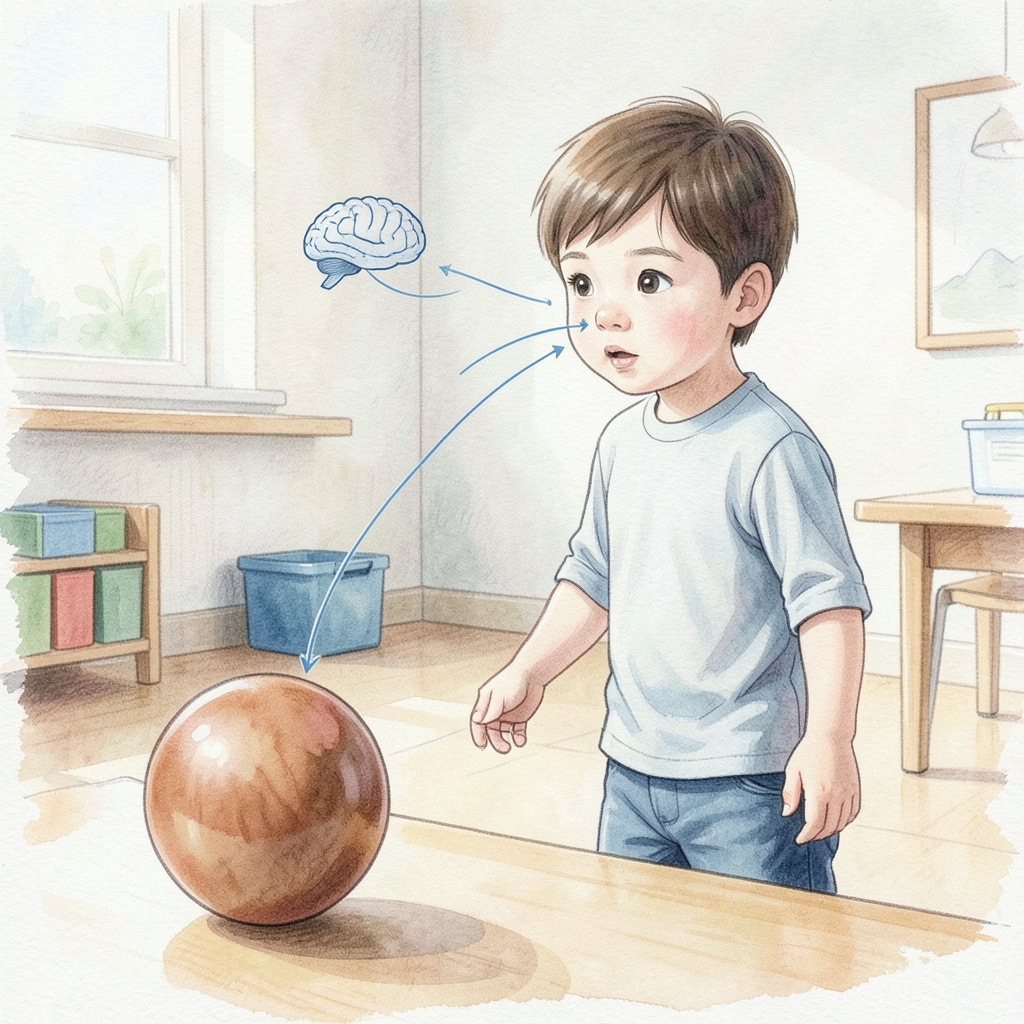
A quick look inside this lesson
What happens in class?
Question to start with
What arrives?
What students actually do
Construct visual pathway.
Evidence of learning
Microscopic/memory limit.
Lesson plan
Senses, Brain & Responses
A step-by-step guide to help you teach this lesson.
Extra context for teachers
Science notes: Senses, Brain & Responses
A short concept refresher and teaching perspective. The full procedure, printable materials, and student tasks are available in the lesson resources above.
Science in context
Model limit
The diagram represents major parts and interactions.
What makes the idea observable?
Compare a rolling ball seen by a student and a bicycle bell heard behind a cyclist.
Keep neutral scenes separate from the pathway students construct.
A misconception worth addressing
- The brain does not create the outside signal.
- The brain cannot be omitted.
Teacher tip
- Use icons.
- Provide a four-box template.
Verified curriculum references
Plan with confidence
Lesson overview
What students will learn
- Build a model showing outside information being received through a sense, processed by the brain, and followed by a response.
- Use multiple scenarios to trace visual and sound information through the same system pattern.
Key science ideas
- Outside information is received through a sense.
- The brain processes information before a response.
- Visual and sound scenarios follow the same major pattern.
Lesson at a glance
- Grade 4
- 50 min
- ~8 min prep
- 4-LS1-2
- 2 materials
What’s included
- Lesson Plan
- Investigation
- Teacher Slides
- Printable Worksheet
- Teacher Answer Key
- Interactive Activity
- Vocabulary