Earth Science · Natural Resources and Energy
Renewable Energy: Choosing Sources for a School
Compare sunlight, wind and fossil fuel energy sources using local conditions, reliability, land needs and environmental effects; defend a school-energy decision with evidence.
Read the science notes ↓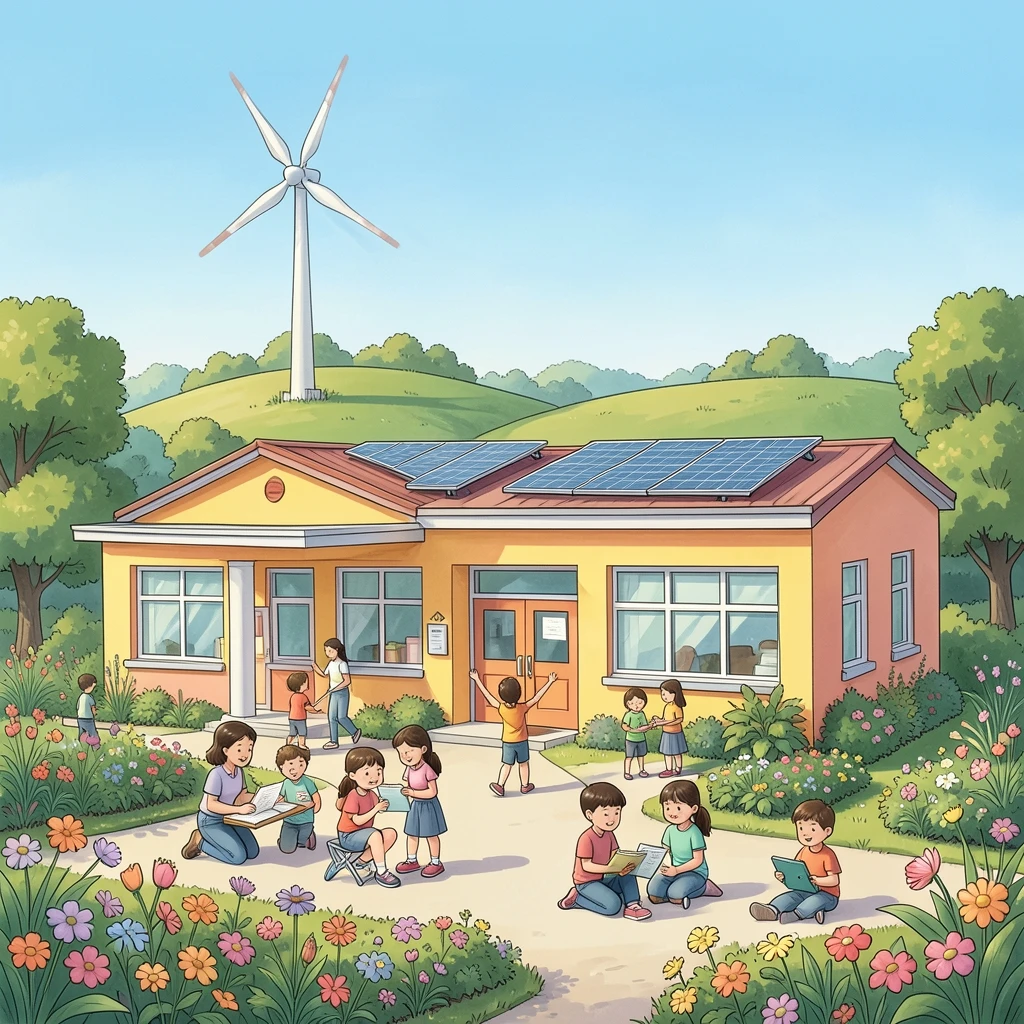
A quick look inside this lesson
What happens in class?
Question to start with
Can a renewable source have an environmental effect?
What students actually do
Compare the site options and highlight uncertainty.
Evidence of learning
A balanced recommendation with uncertainty.
One question from the printable worksheet
A library has shade over much of its roof but a clear sunny parking-lot canopy. Which location may give solar panels more sunlight?
Lesson plan
Renewable Energy: Choosing Sources for a School
A step-by-step guide to help you teach this lesson.
Extra context for teachers
Science notes: Renewable Energy: Choosing Sources for a School
A short concept refresher and teaching perspective. The full procedure, printable materials, and student tasks are available in the lesson resources above.
Science in context
Make a careful recommendation
Recommend an energy option that suits the school site. A sunny roof may favor rooftop solar; a windy area may be useful for wind power only when siting and wildlife effects are addressed.
What makes the idea observable?
A school has an open sunny roof, a windy hill across a protected bird area, and a normal electrical connection. Which source may help most, and what extra information would you need?
No source has zero environmental impact, and reliable planning depends on location.
A misconception worth addressing
- Renewable never means zero impact.
- Four demo days are not annual electricity production statistics.
Teacher tip
- Provide two-column 'helps / needs checking' cards.
- Use oral justification sentence frame: 'I recommend __ because __, but __.'
Verified curriculum references
Plan with confidence
Lesson overview
What students will learn
- Identify sunlight, moving air and fossil fuels as sources of energy used by people, and distinguish renewable and nonrenewable resources.
- Compare two proposed school energy options using observation data and stated environmental trade-offs.
Key science ideas
- Solar panels can convert light from sunlight into electrical energy, but output varies with daylight, cloud cover and panel placement.
- Wind turbines can convert moving-air energy into electricity, but output varies with wind and site conditions.
- Fossil fuels are nonrenewable on human timescales; burning them produces air pollution and greenhouse gases.
Lesson at a glance
- Grade 4
- 45 min
- ~12 min prep
- 4-ESS3-1
- 5 materials
What’s included
- Lesson Plan
- Investigation
- Teacher Slides
- Printable Worksheet
- Teacher Answer Key
- Interactive Activity
- Vocabulary