Earth Science · Earth's Past
Fossils & Past Environments
Organize fossil data, find distribution patterns, and use evidence to infer broad features of past environments.
Read the science notes ↓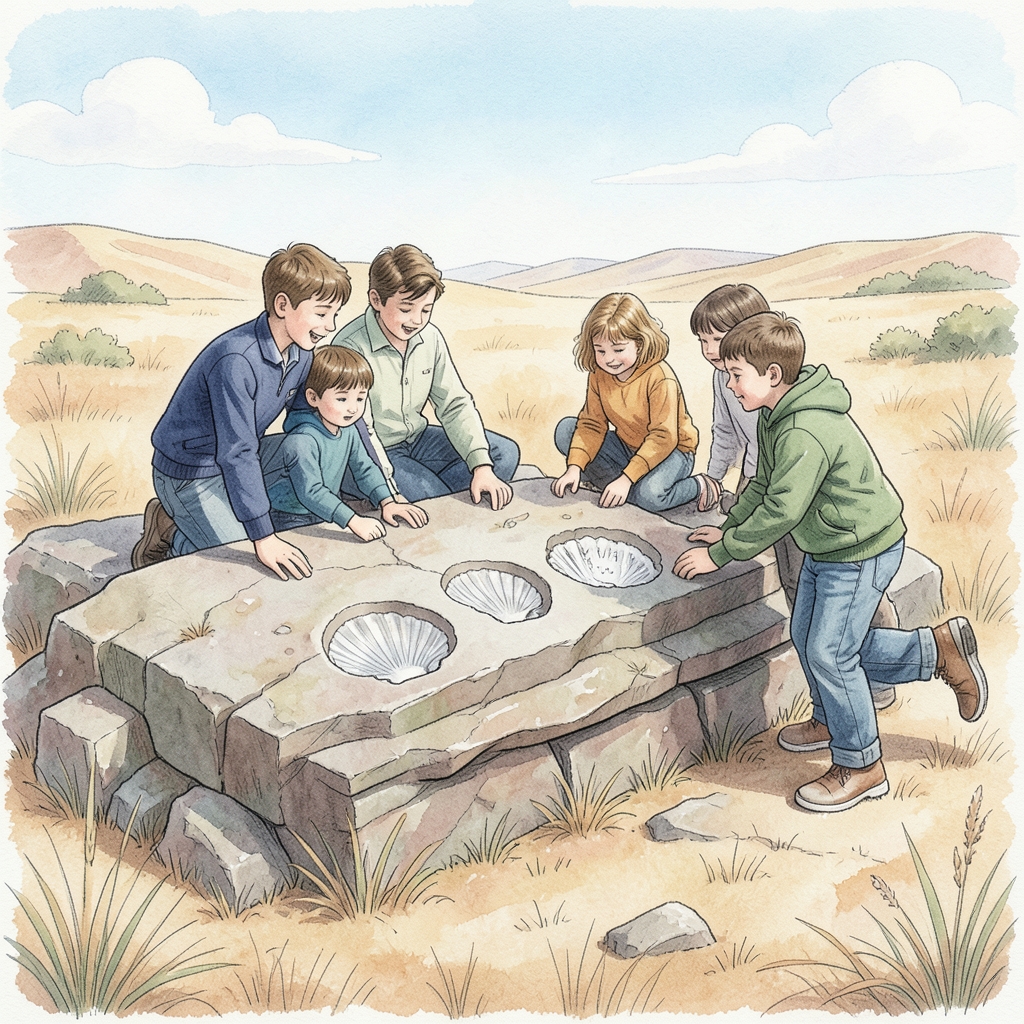
A quick look inside this lesson
What happens in class?
Question to start with
What can we observe directly?
What students actually do
Record fossil data, map the sites, and identify a repeated pattern.
Evidence of learning
No exact-species, exact-age, or exact-weather overreach.
Teacher workspace
Start with the lesson plan.
Lesson Plan
Extra context for teachers
Science notes: Fossils & Past Environments
A short concept refresher and teaching perspective. The full procedure, printable materials, and student tasks are available in the lesson resources above.
Science in context
A second dataset can test the reasoning
Leaf-type fossil impressions in a present-day cold region are observations. A separate comparison card says that similar living plants today grow in warm, wet forests. Together, the fossil record and comparison evidence can support a broad inference that past conditions were warmer and wetter than today.
What makes the idea observable?
Marine shell-type fossils appear at three dry inland sites. What do the site records show directly, and what broad past-environment idea could the pattern support?
First name the recorded fossil type, size band, location, and distribution. Then build a broad inference from more than one observation.
A misconception worth addressing
- A broad fossil category is enough; students should not guess an exact species.
- Relative layer information does not provide an exact numerical age.
Teacher tip
- Use icon-supported site cards and color-coded table columns.
- Provide the frame: We observed ___. This pattern supports ___.
Verified curriculum references
Plan with confidence
Lesson overview
What students will learn
- Organize fossil data by type, size, location, and distribution to look for patterns.
- Use fossil patterns to infer broad features of environments that existed long ago.
Key science ideas
- Fossils can be preserved remains, impressions, or traces of organisms.
- Scientists record fossil type, approximate size, location, distribution, and layer position when those data are available.
- A repeated fossil pattern across sites can support a broad inference about a past environment.
Lesson at a glance
- Grade 3
- 45 min
- ~12 min prep
- 3-LS4-1
- 5 materials
What’s included
- Lesson Plan
- Investigation
- Teacher Slides
- Printable Worksheet
- Teacher Answer Key
- Interactive Activity
- Vocabulary