Earth Science · Weather Patterns
Weather & Seasons: Patterns We Can Observe
Read simple weather graphs and compare seasons to find patterns in temperature, clouds, rain, snow, and wind while remembering that daily weather can still vary.
Read the science notes ↓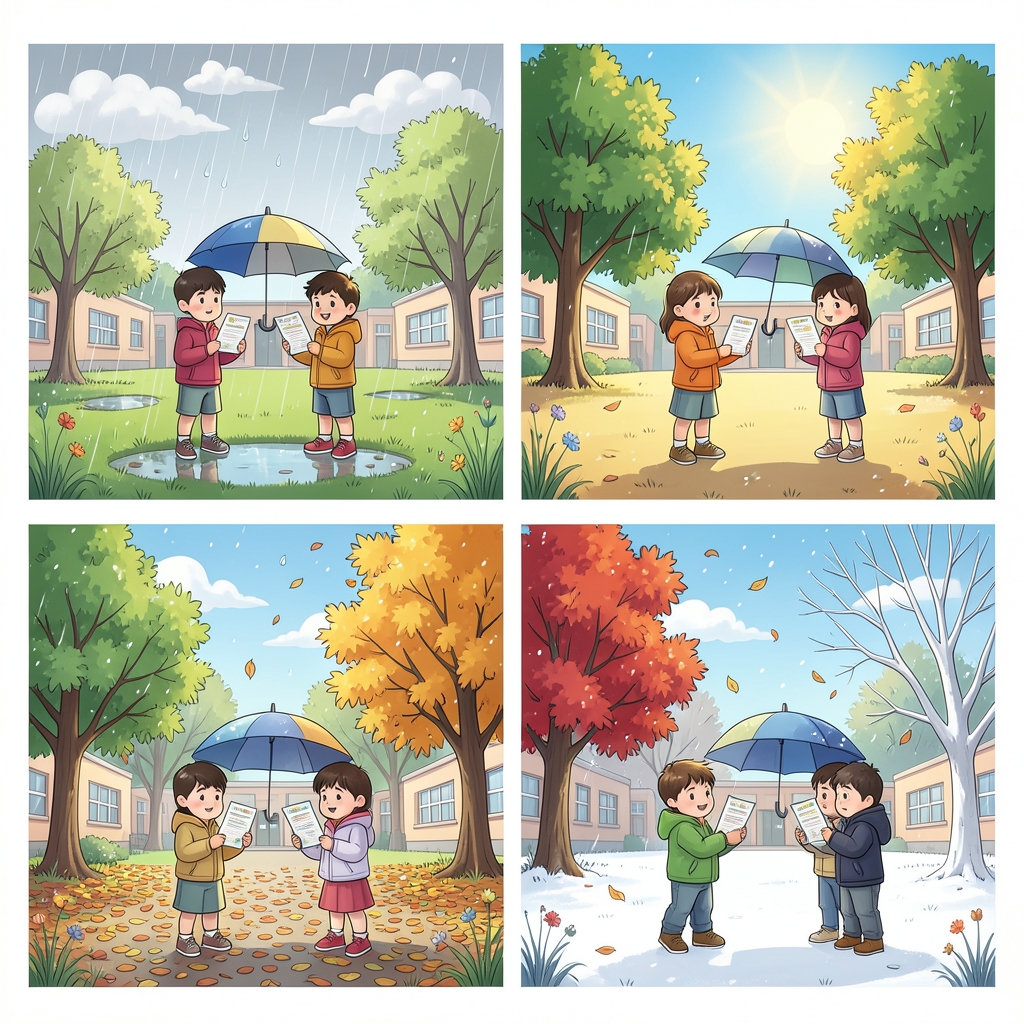
A quick look inside this lesson
What happens in class?
Question to start with
What changed? What weather clues can you observe?
What students actually do
Count symbols and compare warm/cool and rainy/snowy days.
Evidence of learning
Evidence-based comparison and careful prediction.
Lesson plan
Weather & Seasons: Patterns We Can Observe
A step-by-step guide to help you teach this lesson.
Extra context for teachers
Science notes: Weather & Seasons: Patterns We Can Observe
A short concept refresher and teaching perspective. The full procedure, printable materials, and student tasks are available in the lesson resources above.
Science in context
Patterns help with careful predictions
If several observations show that one season is usually warmer than another in the same place, that pattern can help us predict what weather may be more common.
What makes the idea observable?
A local picture graph shows more warm days in summer and more cool days in winter. It also shows some rainy days in both seasons. What pattern is supported?
Students should describe the supported pattern using usually, more, fewer, warmer, or cooler rather than absolute words such as always or never.
A misconception worth addressing
- A season does not guarantee one weather condition every day.
- Weather and season are not the same thing.
Teacher tip
- Use weather icons and color-free shape coding so students do not rely on color alone.
- Read graph labels aloud.
Verified curriculum references
Plan with confidence
Lesson overview
What students will learn
- Read a simple weather picture graph or tally chart and describe a pattern over time.
- Compare two seasons using at least two weather features such as warmer/cooler conditions, precipitation, clouds, or wind.
Key science ideas
- Weather can include temperature, clouds, wind, rain, and snow.
- Weather can change from day to day.
- When we collect many observations, we can notice patterns over time.
Lesson at a glance
- Grade 2
- 40 min
- ~8 min prep
- 5 materials
What’s included
- Lesson Plan
- Investigation
- Teacher Slides
- Printable Worksheet
- Teacher Answer Key
- Interactive Activity
- Vocabulary